


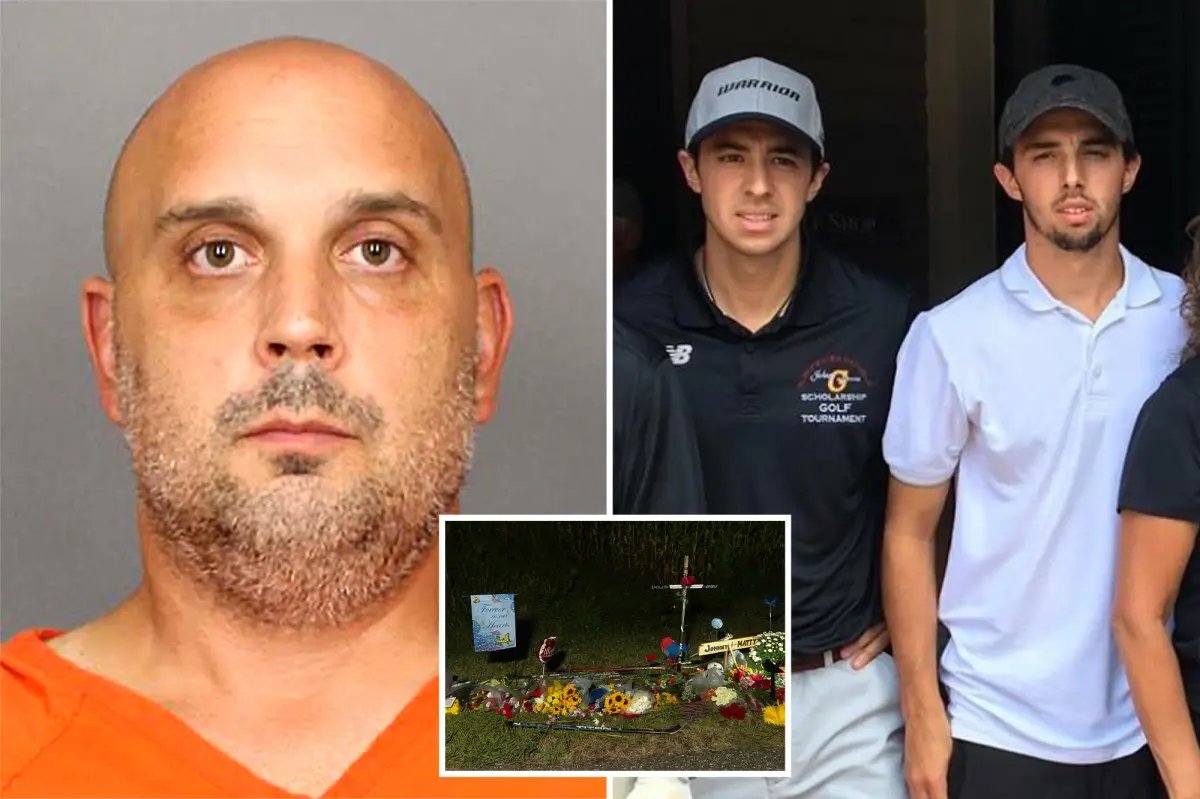

Prosecutors appear to have botched the blood-alcohol test for the New Jersey man accused of drunkenly mowing down NHL star Johnny Gaudreau and his brother, experts told The Post.
Sean Higgins wants the criminal charges against him tossed on the grounds a bad blood-alcohol content (BAC) test wrongly pegged him at .087 — above the legal limit of .08 — when he was actually at .075, his lawyer claimed.
New Jersey legal experts said there is merit to Higgins’ arguments that the blood test is likely to be a major factor at trial.
At issue, prosecutors ran the blood test on Higgins’ blood plasma, which showed him over the limit after the fatal crash, his lawyers claimed.
However, Higgins’ team hired a toxicology expert who found his BAC was actually below the legal limit when adjusting for the false increase plasma tests yield, according to Higgins’ lawyer.
Anthony Vecchio, a Woodbridge, NJ-based lawyer who specializes in DUI cases, said “they are supposed to test whole blood,” because a plasma test can show BAC that is artificially higher.
Another Garden State lawyer, Donny Epstein, called the prosecution’s use of blood plasma “a head scratcher.”
“You’re left with the question, why did they do it this way,” Epstein said.
Salem County prosecutor Michael Mestern downplayed the defense claim that the BAC test was problematic, saying his office would “refute” the findings of Higgins’ toxicology expert — and said it should be up to a jury to decide if the test is valid or not.
Mestern also claimed his office had plenty of other damning evidence with which to convict Higgins.
The charges are two counts of reckless vehicular homicide, two counts of first-degree aggravated manslaughter, leaving the scene of a fatal accident and tampering with physical evidence.
Higgins faces 72 years behind bars if convicted on all counts for the Aug. 29, 2024 crash that left Johnny, 31, and his 29-year-old brother Matthew dead as they were cycling on the side of the road in Oldmans Township — across the Delaware River from Wilmington — after their sister’s wedding rehearsal dinner.
While the experts agreed the BAC test should have been done using whole blood, they didn’t think a judge would throw the whole case out.
But Higgins’ side has a chance of blocking the blood evidence from trial, they said.
Jonathan Bruno — a Rutherford-based defense attorney — said Higgins’ toxicology expert, Gary Lage, is “very well respected” and noted his own firm, Bruno and Ferraro, regularly employs Lage for cases.
“If they used plasma, a good criminal defense attorney would argue that the testing procedures were not followed appropriately and that’s exactly what is happening here,” Bruno said.
Still, “it may not be a fatal and critical flaw because there are other ways the state can proceed even if the blood reading itself – and this would be a big win for the defense – were to be kept out.”
“Even if you don’t have scientific data to speak to intoxication, the state can rely on physical observation and field sobriety tests,” Bruno said.
“In this case there were witnesses who are able to speak to his physical manifestations of intoxication.”
Vecchio agreed that “even if the blood got thrown out tomorrow, that’s definitely not going to get the case thrown out.”
In general, motions to dismiss indictments “are a long shot” but a defense lawyer might use the legal maneuver “for leverage because if they have teeth, sometimes it’s an invitation for better kinds of plea negotiations,” Bruno said.
But plea deals can be harder to reach in a “tragic,” high-profile, fatal crash where prosecutors have the impossible task of doing the “math” to come up with a penalty offer that amounts to the “value of this person’s life,” Bruno said.
Higgins turned down an offer for 35 years from prosecutors in 2024.
Mestern said in the Friday papers that the prosecution could still clinch a conviction without the blood evidence because of other evidence — like Higgins admitting on police body camera footage at the scene that he’d had five to six drinks that day and because he was also captured on video allegedly failing field sobriety tests.
But if the jury wasn’t convinced Higgins was drunk, the case would be much harder to win since proving the element of “extreme indifference to human life” as part of the charge of manslaughter or the element of recklessness as part of the vehicular homicide charge likely hinge on intoxication.
“If you strip out intoxication, I think it would be very difficult to prove the aggravated manslaughter with these facts,” Vecchio said.
Still, “juries hate drunk drivers when they cause accidents where people are injured or killed and it’s not hard to prove someone was drunk at trial even without a blood result or a breath test results,” Vecchio added.
Vecchio also said not showing the jury Higgins’ borderline blood results could ironically “actually hurt him a little bit” because jurors might imagine he was much more drunk than the BAC reading based on myriad other evidence like the video footage and the cops’ likely testimony about how he seemed drunk –smelling of alcohol and standing unsteady on his feet.
Mestern said the fact that Higgins didn’t stop to see if the brothers were okay after hitting them, only eventually stopping down the road where cops found him, is enough to prove the element that he was indifferent toward human life.
“The fact that defendant did not stop to assist Matthew and John after hitting them with his SUV could be enough, alone, to determine the defendant’s actions amounted to an extreme indifference to human life,” Mestern wrote.
Higgins lost a prior bid to have his case thrown out based on the fact the brothers were more drunk than he was at the time of the crash.
Prosecutors claim Higgins — an army vet who served in the Iraq war — careened into the siblings after he passed a car in front of him that had slowed down after spotting the cyclists.
Higgins is due in court on May 11 for arguments on his motion to dismiss the indictment.
A lawyer for Higgins and a spokesperson for the prosecutor’s office didn’t return requests for comment.
