


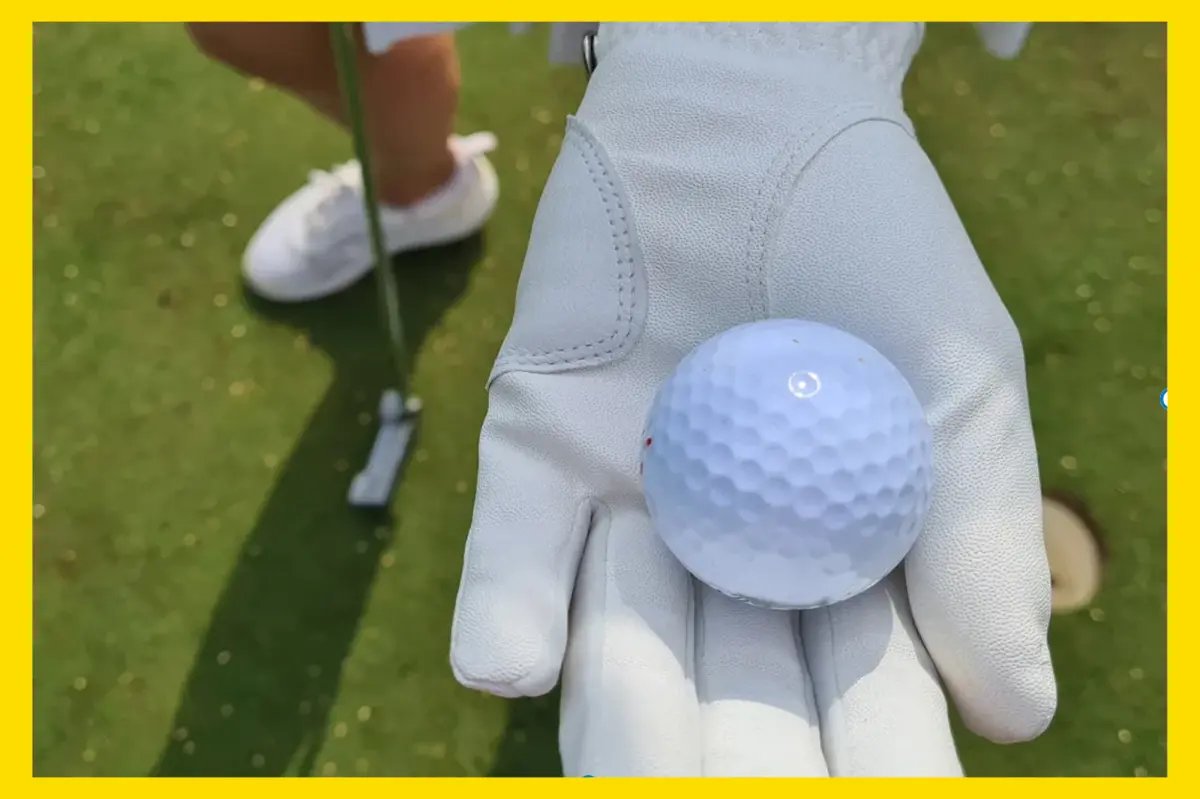
Whether you’ve been golfing your entire life or you’re new to hitting the links, there’s one thing that can significantly impact your game: the type of golf balls you use. Finding the right golf equipment can be a trial-and-error process until you find the perfect fit. Golf balls are no different.
Although golf balls often appear the same on the outside, inside, they can have drastically different constructions that make them react differently when you hit them.
For instance, some golf balls are built to fly farther, while others are designed to let you put the precise amount of spin you want on them so they land exactly where you aimed.
The number of layers and materials used directly impact the price of the ball, making some better fit for serious players and others a smarter choice for more casual golfers.
To understand how to find the perfect ball, we reached out to the men who study them for a living, as well as hobbyists who know the perfect match when they see one.
We consulted with several in-house golf experts, including Frank Massaro, manager of commerce partnerships; Jeff Herman, a 30-year range veteran who runs the golf gear review site Modrn Golf; and Tony Covey, editorial director of MyGolfSpy, a review site featuring its own dedicated golf ball testing lab.
We’ve shared their recommendations and expert opinion in our FAQ below. Ready to hit the green? Shop on.

Pros:
- Free shipping on every order, no matter the price
- Great for long distances
Cons:
- Focusing on distance can sacrifice touch and finesse in chips and putts
If you’re looking for a long-range golf ball, these are made for extra distance and can handle strong hits without cracking. Learn more about golf balls from experts in our thoughtful roundup.

New York Post Review: “I will never forget the first time I broke 90 in golf,” said Massaro. “I was in an absolute flow state, and I still keep my first two birdie balls in a box. What brand of balls were they, you ask? Vice. Ever since then, I have always enjoyed the feeling and aesthetic of Vice’s product, from the Pro Balls to the Drive series.
This season, since I will be concentrating more on refining my game, I wanted to start with a no-frills ball that claims to focus on distance and at a great price point at well under $2 per ball. I definitely won’t be sad if I happen to donate a couple of balls to the course.”
Balls per pack: 12 | Color options: 4

Pros
- Designed to lower game spin
- Mid-flight aerodynamics to bring the ball down
Cons
- Some Amazon reviews had issues with packaging
Herman said this is “the number one ball on tour for a reason.”
“Longest ball and the best action within 100 yards that any ball will give you,” he said. “Any middle to low handicap player will enjoy and appreciate everything this ball offers. [The] only stumbling block is the price.”
Balls per pack: 4 | Color options: 1

Pros:
- They feel incredibly smooth and soft off every clubface
- At $24.99, they offer fantastic performance-for-cost
- Available in multiple colors
Cons:
- Because they are designed to reduce spin (to keep your long shots straight), expect your chips and pitches to roll out more
At $24.99, it is a highly popular, budget-friendly option designed to help casual players and players with moderate swing speeds get the most out of their game.
Herman called this “the best golf ball under $25.00, by far.”
“The soft feeling and tour-like distance make [a] great combination,” he said, adding that golfers at all levels can enjoy this option. “I’ve personally played this ball for years, and it never ceases to amaze me.”
Balls per pack: 12 | Color options: 8

Pros:
- The bright yellow color makes the ball easy to spot
- Brand name makes a great conversation starter
- Affordable at just over $2 for each golf ball
Cons:
- The name might offend someone
Despite the slightly off-putting name, Massaro notes that these golf balls truly deliver on performance. In fact, if you’re looking to spark a conversation or even close a few deals on the course, this vibrant yellow ball might just be your secret weapon.

New York Post Review: “Ok, hear me out! When reading this article, you definitely did a double-take at this brand’s name and honestly, I think that is the hook to this company,” said Massaro. “Golf comes with its unique tropes and traditions for sure. Many of them come with a buttoned-up, refined approach, even if that’s not the intent. P*ss M*ssle golf balls, to me at least, just seem like a breath of fresh air and a conversational piece to set up a great day on the course. The entire ball makeup, from the color to the emblem and lineup dashes, complete with Dad Joke-style quips, along with the price per ball (just over $2 each), already has me glad I grabbed this ahead of the season.
I have been playing golf consistently for about four years now and I am no stranger to letting a ball fly way off its intended course. With its very intentional bright yellow color, I shouldn’t have a problem locating my ball and thus saving some cash in the long run.”
Balls per pack: 12 | Color options: 1

Pros
- Good for all players
- Designed to give more distance
Herman called this an “incredible value golf ball for all skill levels.”
“[It] won’t break the bank and has some incredible performance, and is readily available at all Costcos or online,” he said. “Amazing for newer to advanced players.”
Balls per pack: 24 | Color options: 1

Pros
- Spin Skin with SeRM
- Alignment aid
Cons
- May be too soft for some golf players
“I have personally had the best rounds of my life using this ball,” Herman said. “To make it even better, Srixon puts on a promotion every year where you buy two dozen and get one [dozen] free.”
Balls per pack: 12 | Color options: 1

Pros:
- Low-compression, high-energy core makes it incredibly easy to launch the ball high and straight
- The 338 Speed Dimple Pattern reduces aerodynamic drag
Cons:
- While less spin off the tee keeps the ball straight, advanced players who want to intentionally curve or work the ball (draws/fades) might find this ball too stable
If you want the most band for your ball, get the 3-pack via Amazon for fast, free dshipping to Prime members and 6 balls to chuck over the green. You know a few will end up in a pong and depending on your game, someone’s window. Best be safe than sorry. The Srixon Soft Feel Golf Balls have the same recommended softness Jeff Herman recommends with a better deal.
Balls per pack: 36 | Color options: 1
FAQ

What are the different types of golf balls?
Unlike golf clubs, which tend to fall into standard definitions such as drivers, putters and wedges, there is not one consistent system for categorizing golf balls. Different golf gear websites will have their own categories, and the experts we consulted all had slightly different ways of distinguishing golf balls.
However, to make your shopping easier, the expert-provided guidelines we’re using here were prioritized because they match up nicely with the categories that many online golf supplies stores such as Golf Galaxy use. Major retailers such as Amazon also use a version of these categories, so wherever you shop, you’ll be able to find what you’re looking for.
According to Herman, there are four main types of golf balls:
What’s the best distance golf ball?
Distance golf balls are intended, as their name suggests, to let you hit them long distances. Their trade-off is that they’re less agile if you need to hit a ball on a curved path or if you’re playing on a golf course with shorter holes — under 100 yards.
“These are usually the least expensive,” Herman said, and you can get a dozen for $10 to $20. “These are geared to keep the golfer hitting straighter shots. The focus is straight shots, and as far as they can go. [They] help new golfers with the game by keeping shots straighter and in bounds.”
If you’re looking at golf balls based on their construction, distance balls are usually made with one or two layers. Golf balls can also be categorized by their number of layers, which range from a solid, one-piece design up to four or five layers.
One place we like shopping golf balls is Dunlop Sport, which has a handy ball finder section for Srixon balls. And of course, Amazon has some of the best prices on golf balls.
“Two-piece balls generally spin less than performance offerings,” Covey said (more on performance golf balls below). “While that can have negative greenside implications, the lower spin contributes to straight flight, particularly with longer clubs.”
What are soft-feel golf balls?
“These are a step above the pricing for a distance ball but have better technology for shots within 100 yards,” Herman said, adding that soft feel golf balls are usually two- or three-layer style balls.
Herman called these “softer feeling ball[s]” because when you hit them with a driver or iron, they don’t sound as loud as other types of golf balls. “[The] distance is normally as good or a bit better than distance ball[s],” Herman said. “These also help keep the balls on the course and [help with] hitting straight shots.”
According to Covey, golf balls made with two or three layers don’t offer the same amount of control as those with more layers. “With fewer layers to work with…it’s simply not possible to dial in flight and spin properties to the same extent, especially on shorter shots closer to the green,” he said.
You can expect to spend $20 to $35 for a dozen.
What is a tour value golf ball?
According to Herman, tour value golf balls are a step up from soft feel balls and offer “better distance, increased feel and better ability to…have the ball perform within 100 yards.”
Herman said these “still keep the ball straight” and can also be sold as a low-spin variety to further reduce the amount the ball will spin and curve in the air. “[These] will help keep shots within 100 yards stay on the green,” Herman said.
You can expect to spend $30 to $45 for a dozen.
Tour performance golf balls
Herman called these “the top balls you can purchase” because they have “the best technology of all balls.” They usually have three or four layers (and sometimes five), and they’re designed to be able to travel the farthest off of any type of club. That means your distance won’t be seriously reduced when you’re in the middle of the hole and have to shoot with an iron or a wedge instead of your driver.
Covey added that the greater number of layers on tour performance golf balls help you better control their path and spin. “They’ll also provide greater stopping power off the irons without relying on high flight and steeper landing angles,” he said.
“Tour balls have an incredible feel around the green and have the ability to spin and stop shots where the other category balls fall short,” Herman said, adding that these offer the “best total distance” and “best feel.”
Herman also mentioned that these products can be made with visual aids to help you align your shots. He called these additions “the hottest thing for golf balls in 2023 and 2024.”
You can expect to spend $35 and more for a dozen.
Which golf balls are best for beginner vs. advanced golfers?
Both Herman and Covey recommended that beginner golfers prioritize the price of their golf balls over other properties. “Beginners typically lose a lot of golf balls, so cost can’t be overlooked,” Covey said. “A low spinning two-piece ball may be a better choice for someone just looking to keep the ball in play.”
Herman said distance golf balls are a good choice for beginners, while tour performance golf balls are well-suited to a more advanced golfer’s skills and abilities. “However, an average golfer would benefit from using tour value and above due to the technology used within 100-yard shots and putting,” Herman added.
“The sweet spot for all golfers is the tour value ball,” Herman said. “Great distance, good feel and good within 100 yards.”
What should you look for when shopping for golf balls?
As long as you’re buying name-brand golf balls from a trusted retailer, the main thing to keep in mind while shopping is what you want out of your new golf balls. To that extent, Covey and Herman both advised asking yourself which areas in your game need improvement, then identifying which types of golf balls can help.
“For example, are you slicing the ball out of bounds? Then a distance ball would be better,” Herman said. “Or are you hitting the green but it skips by because you are playing a distance ball and you need something to grab the green and stick?”
If you want to work on your putting or your tee shots — two common areas that golfers of all skill levels can improve upon — Herman recommended trying golf balls with visual alignment aids. “They can make a bad putter better, and help with…aligning your tee shots,” he said.
How long do golf balls last?
“Outside of someone losing them while playing, balls should last two years as long as they are kept in a dry, cool space,” Herman said. “Keeping them in your trunk will greatly reduce their life.”
However, even if you’re able to go multiple rounds playing with the same golf ball, both Herman and Covey recommended replacing it after a few rounds, as repeated use can impair its ability to perform. “Any time there is noticeable damage to the cover, the ball should be replaced,” Covey said. “Moderate to severe cuts and scrapes can significantly impact the aerodynamic performance of the ball.”
For over 200 years, the New York Post has been America’s go-to source for bold news, engaging stories, in-depth reporting, and now, insightful shopping guidance. We’re not just thorough reporters – we sift through mountains of information, test and compare products, and consult experts on any topics we aren’t already schooled specialists in to deliver useful, realistic product recommendations based on our extensive and hands-on analysis. Here at The Post, we’re known for being brutally honest – we clearly label partnership content, and whether we receive anything from affiliate links, so you always know where we stand. We routinely update content to reflect current research and expert advice, provide context (and wit) and ensure our links work. Please note that deals can expire, and all prices are subject to change.
