


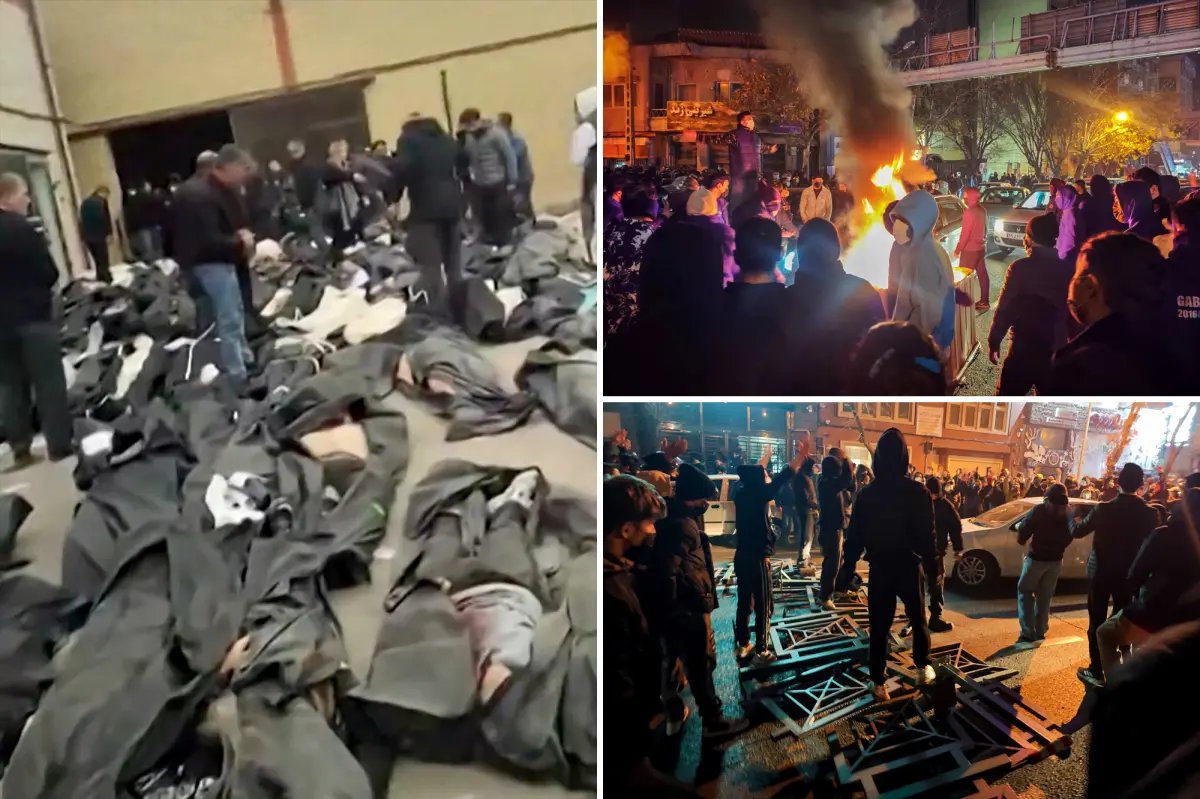

The streets of Iran are near a breaking point over public executions, economic collapse and a war that’s been raging on for more than five months, anti-regime figures in Tehran told The Post.
“A revolution can happen any day now — people want revenge,” a protest leader said, referring to the regime’s brutal January crackdown that President Trump said killed 52,000 people.
An independent journalist active in the Iranian underground said that preparations are already being made for the next uprising, and that activists from all walks of life are determined to make a final, decisive blow against the regime.
Both Iranians spoke with The Post through a translator by cellphone after signing on to a VPN.
“We’re studying the protests from January, determining what tactics worked and which didn’t; we’re analyzing maps to determine the safest and most dangerous areas to congregate,” the journalist said.
He claimed that the Iranian resistance has hidden crude weaponry and tools throughout the country — bricks, rocks, wooden clubs, chairs and tires used to block roads — waiting for the day that people once again take to the streets.
Small groups are working clandestinely to procure firearms to distribute to demonstrators — utilizing guns stored in certain private homes and smuggled from abroad, the protest leader claimed. They did not specify who would be providing these weapons.
“When we went out in January, we were like lambs to the slaughter; the Basij forces were using firepower that you couldn’t believe; the streets were like a graveyard, corpses everywhere, the streets ran red with blood,” she said, unable to contain her rage and grief.
She warned regime forces: “Next time we come out, we’re coming out armed.”
The trauma from the January protests where thousands of unarmed demonstrators were mowed down by the regime is the primary reason a popular uprising hasn’t sprung up yet, both Iranians claimed.
“Everyone has lost somebody,” the protest leader said.
Also keeping a revolution at bay are foreign mercenaries the Islamic Revolutionary Guard Corps has brought in from countries like Iraq, Afghanistan and Pakistan.
“They pull people out of their cars when they’re driving and search them and search their vehicles,” the independent journalist said.
“They gallivant around our country as if they’re the locals and we’re the foreign invaders, instead of defending our skies, the regime has decided to go to war with its own citizens,” the protest leader said.
The journalist also claimed that the regime has resorted to arming teenagers — some as young as 13 or 14 — to patrol neighborhoods.
“This is a tragedy waiting to happen,” he said.
The war has also created uncertainty in the region, with activists unsure of how far the US will ultimately go in its strikes against the regime and its assets — though President Trump on Saturday night said he halted the latest planned attack as peace talks appeared to be heading in the right direction.
Cracks in the tyrannical regime are already starting to show, with up to 2,000 demonstrators coming out in Isfahan to protest the public hangings of anti-regime protesters Abolfazl Sepahi Badjani and Amir Hossein Safari Hosseinabadi, according to the journalist.
Sky-high inflation, as well as electricity and water shortages in the country’s southern regions, are also fueling public anger at the mullahs, the journalist said.
“Even middle-class people are skipping one or two meals a day, there’s food on the shelves at grocery stores, but nobody can afford it,” he said.
Neither Iranians could say exactly when a widespread uprising would come, but they said that if the executions and repression continue and the economy doesn’t improve, any single incident could be the spark.
“We know the stakes, either the regime goes, or we do,” the protest leader said.
