



It’s Dante’s Peak.
A volatile volcano in Nicaragua is refilling with magma, sparking fears of a cataclysmic event that could affect the nearby population center, per a study in Geophysical Research Letters.
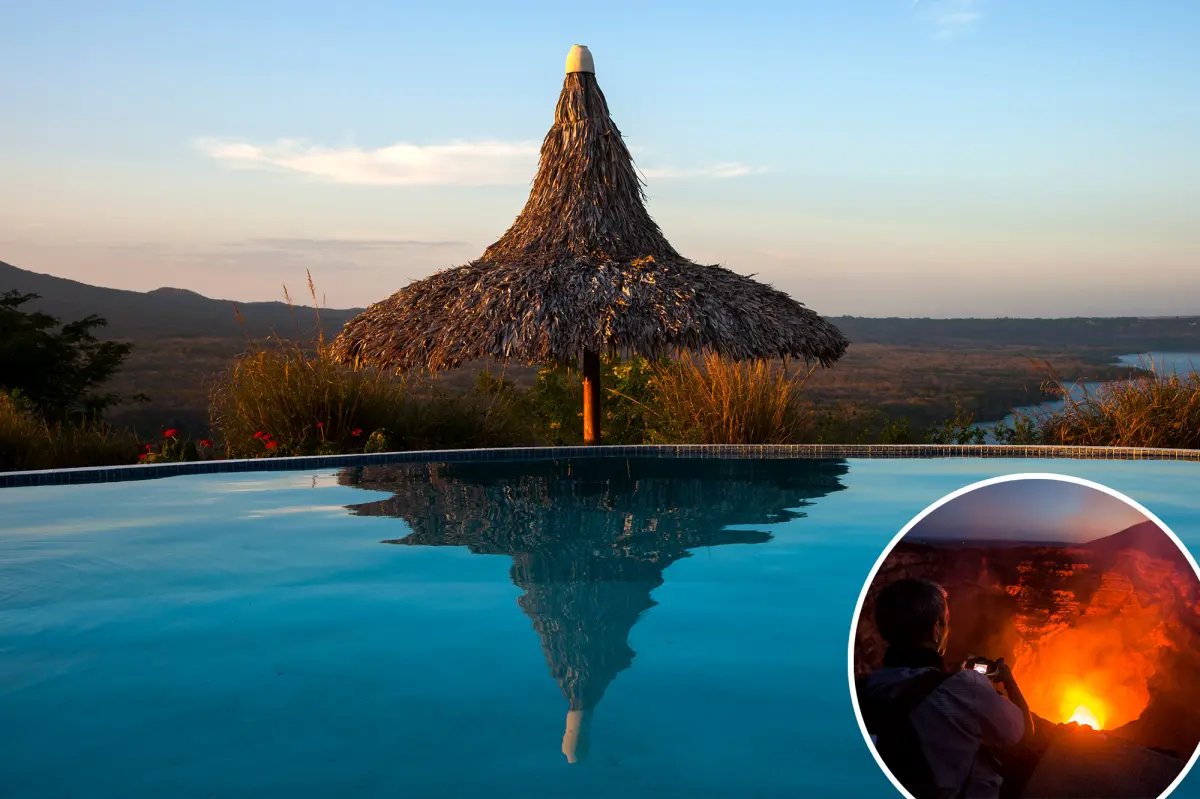
The Masaya volcano is an active caldera near Managua that attracts thousands of monthly visitors to its hellacious-looking lava lake dubbed the “Mouth of Hell,” Science Alert reported.
Due to the tourist stream and its proximity to 2 million people, volcanologists fear that an eruption could prove catastrophic, given Mayasa’s penchant from waffling between effusive, Hawaii-like lava flows and more explosive events.
The mercurial mountain hasn’t produced a major lava flow since 1772, but it has experienced several explosions over the past few years, during which only a few people were injured.
Masaya also emits dangerous concentrations of sulfur dioxide gas, which can prove hazardous to our health.
“Having a thorough understanding of Masaya’s volcanic activity and its related hazards is critical,” Lizzie Johnson, who spearheaded the research as part of Penn State’s geosciences program, said in a statement.
To determine what/if any fresh hell is brewing down below, Johnson and her team had to give “The Mouth” an oral exam — they analyzed satellite data to investigate how the ground surrounding the caldera changed from 2018 to 2024.
Between 2018 to 2022, the Masaya Central Reservoir – a magma chamber just north of the famous Santiago crater – shifted around 3 centimeters (1.2 inches) away from the satellite, indicating that the ground was sinking.
It then ascended from 2022-2024, which the team interpreted as the lava reservoir replenishing.
“When it’s subsiding, that means that there’s probably magma draining away from the volcano, but once the ground starts uplifting again, that can mean that there’s potentially new magma moving in,” said Johnson.
Over the course of the six years, the subterranean region around the Santiago crater subsided, hinting at the existence of a second magma chamber within this “complex” network of volcanic plumbing, per the scientists.
Thankfully, the team’s findings don’t suggest that any imminent threats to the surrounding community — we need not fear the “Mouth of Hell” belching up molten rock just yet.
More research is needed to paint a clearer picture of Mayasa’s hazards and how to monitor and mitigate any underground movements before they spill into the main-stream.
