


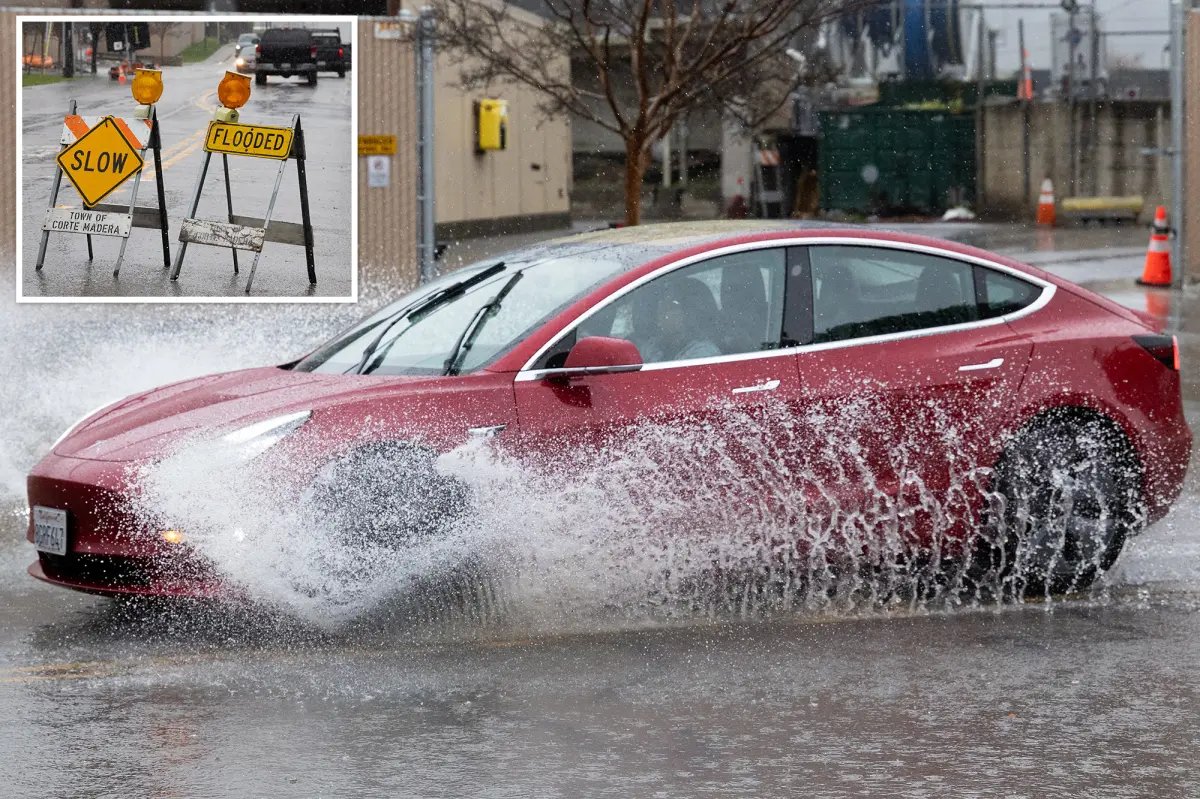

As storms batter California this week, EV drivers could be in for more than just traffic and dangerous road conditions.
Fire officials are urgently warning electric vehicle drivers, e-bike riders and e-scooter users against the potential danger bought on by flooding.
The risk — known as delayed thermal runaway — occurs when an electric vehicle with a lithium-ion battery drives through saltwater. But the reaction can happen even after flooding has cleared the streets.
Fires resulting from these reactions can start “hours or days” after saltwater has entered a vehicle’s battery compartment, San Francisco Fire Chief Dean Crispen said in a social media video. He explained that this risk is not unique to electric cars, but anything with a lithium-ion battery.
“Those should not be driven through standing saltwater with King Tides. We have great concerns of folks driving through on either e-bikes or vehicles and those micromobility devices or cars igniting days later,” Crispen said.
While the risk has already heightened in San Francisco — which received half an inch of rain on Wednesday morning — the fires can ignite in any electric vehicle facing saltwater exposure.
King Tides, which are the highest predicted tides of the year, are set to continue statewide through the end of January 2027. As the Super El Niño brings flooding and sea levels to historic highs, Californians can expect more frequent and severe saltwater flooding across the entire Pacific coast.
EV giant Tesla said that car owners should treat their vehicle “as if it has been in an accident” if it’s been submerged and keep it at least 50 feet from flammable materials.
The San Francisco Fire Department encourages electric vehicle owners to park their cars, e-bikes or scooters on the street if they believe they have driven through standing saltwater.
“Please contact a professional vehicle technician if you suspect your vehicle or device has been subjected to salt water exposure and have it inspected,” the department warned.
Due to the potential for hours- or days-long delays, officials also caution EV owners against charging their batteries until they have been inspected by a certified professional.
