



As more Americans prioritize staying mobile and independent as they age, experts are pointing to a surprisingly simple measure of health.
The number of times a person can rise from a chair in 30 seconds can be an indicator of lower-body strength, which is closely linked to mobility, functional fitness and healthy aging.
Interest in the test appears to be growing, with online searches for “sit to stand exercise” up 287% over the past three months, according to Google Trends analysis.
The CDC’s Stopping Elderly Accidents, Deaths & Injuries (STEADI) program states that the purpose of the 30-second chair stand test is to assess leg strength and endurance, with below-average scores indicating increased fall risk.
Bruno Pontes, an ACSM- and AFAA-certified personal trainer at Muscle Booster in California, shared what the sit-to-stand test actually measures and why experts consider it a strong indicator of fitness.
Nick Schofield, a tactical athlete physical coach in the U.K., also provided a video demonstration of the exercise for Muscle Booster.
“What makes this test a great measure of fitness is that it simulates the everyday movement of getting up and down from a chair, compared to machine-based strength tests, which instead isolate muscle groups,” Pontes told Fox News Digital.
“The sit-to-stand test is an excellent indicator of lower-body strength, muscular endurance, balance and mobility,” Pontes said. It is also commonly used by healthcare professionals to help assess fall risk in older adults.
While there are several iterations of the sit-to-stand test, the 30-second chair stand test is the go-to exercise endorsed by public health organizations like the CDC, the expert noted.
How to perform the test at home
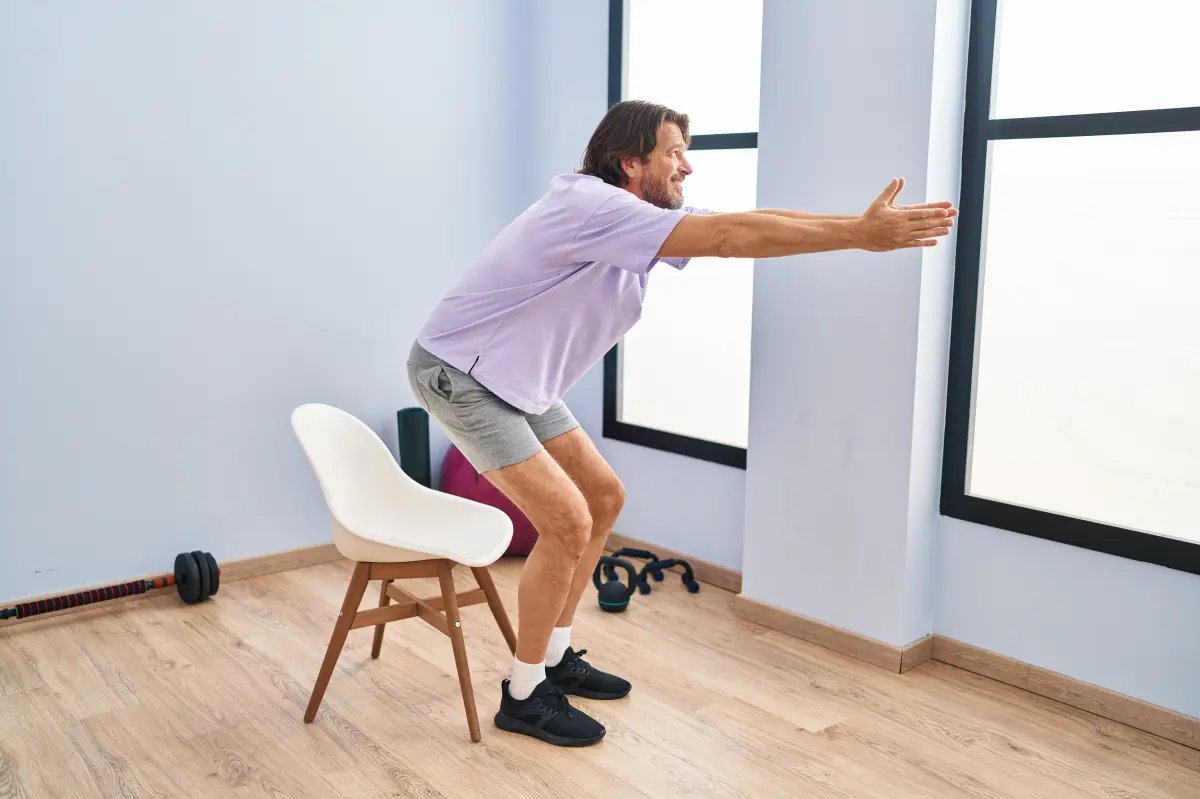
The sit-to-stand test is easy to perform at home, Pontes said, as the only thing needed is a sturdy chair. He outlined the following steps.
1. Position a sturdy chair against a wall to prevent it from moving.
2. Start by sitting upright in the chair with the feet flat on the floor, shoulder-width apart, with arms crossed over the chest.
3. Once the timer starts, rise to a full standing position with straight knees and hips before sitting back down again.
4. Repeat as many full stands as possible in 30 seconds and record your total.
“As an important note, anyone with significant balance problems, recent surgery, severe joint pain or cardiovascular concerns should consult a healthcare professional before performing the test,” Pontes advised.
What counts as a ‘good’ score?
What is seen as a “good” score varies from person to person and is dependent on a number of factors, including age and gender, Pontes said.
“However, the following benchmarks are good to aim for to measure your lower-body strength,” he added. These benchmarks are based on how many full stands can be completed in 30 seconds from a standard-height chair.
- Ages 60–64: Men: 14 or more | Women: 12 or more
- Ages 65–69: Men: 12 or more | Women: 11 or more
- Ages 70–74: Men: 12 or more | Women: 10 or more
- Ages 75–79: Men: 11 or more | Women: 10 or more
- Ages 80–84: Men: 10 or more | Women: 9 or more
- Ages 85–89: Men: 8 or more | Women: 8 or more
- Ages 90+: Men: 7 or more | Women: 4 or more
“It is important not to obsess over the number you achieve — the focus should be on the ease of movement and making daily functions easier,” Pontes said.
“If rising from a chair becomes easier over time, that’s a great indicator that lower-body strength and functional fitness are improving,” he went on. “If you fall below the target number, don’t worry — there are many different exercises you can implement into your daily routine to help strengthen your lower body.”
Top exercises to help build strength, balance and endurance
The following exercises can be executed at home to help improve your sit-to-stand performance, according to Pontes. These moves help to build strength
Squats
“Squats help to build strength primarily in the quadriceps and glutes, while also engaging the hamstrings and core,” Pontes told Fox News Digital. “They are also a great exercise for seniors, as they place limited amounts of stress on your hips and spine.”
Squats can be performed by standing with the feet shoulder-width apart and lowering the hips back and down into a seated position. Be sure to keep the back straight and chest up.
Lunges
“These low-impact exercises can help identify any strength imbalances that may be affecting mobility and stability, as each leg works independently,” Pontes said.
To perform a lunge, stand with the feet shoulder-width apart and step forward with one leg, creating a right angle at the knee. The front knee should sit directly over the ankle/heel and should not extend past the toes.
Hold this position briefly before pushing through the heel on the front foot to engage the glutes and return to the starting position, then repeat for the other leg.
Calf raises
“Calf raises help keep the calf muscles strong and functional as we age, to support everyday, functional movements,” Pontes said. Stand with the feet hip-width apart, keeping an upright posture and engaging the core. Slowly push through the balls of the feet to raise the heels off the floor as high as possible. Pause briefly at the top, then lower the heels back down to the ground with control.
feet to raise the heels off the floor as high as possible. Pause briefly at the top, then lower the heels back down to the ground with control.
Importance of leg strength for longevity
As people age, they become more susceptible to sarcopenia, the gradual loss of muscle mass and strength over time, according to Pontes. This can make routine activities more difficult and increases the risk of injury.
“Lower-body strength plays a vital role in maintaining independence because it supports many of the movements we rely on every day, such as climbing stairs, getting up from chairs, carrying groceries and walking confidently,” the fitness expert noted.
Maintaining strength in the legs and hips helps to preserve mobility and lower the risk of falls and injury, Pontes said.
“This mobility helps enable people to remain active and keep moving freely through their later years.”
