


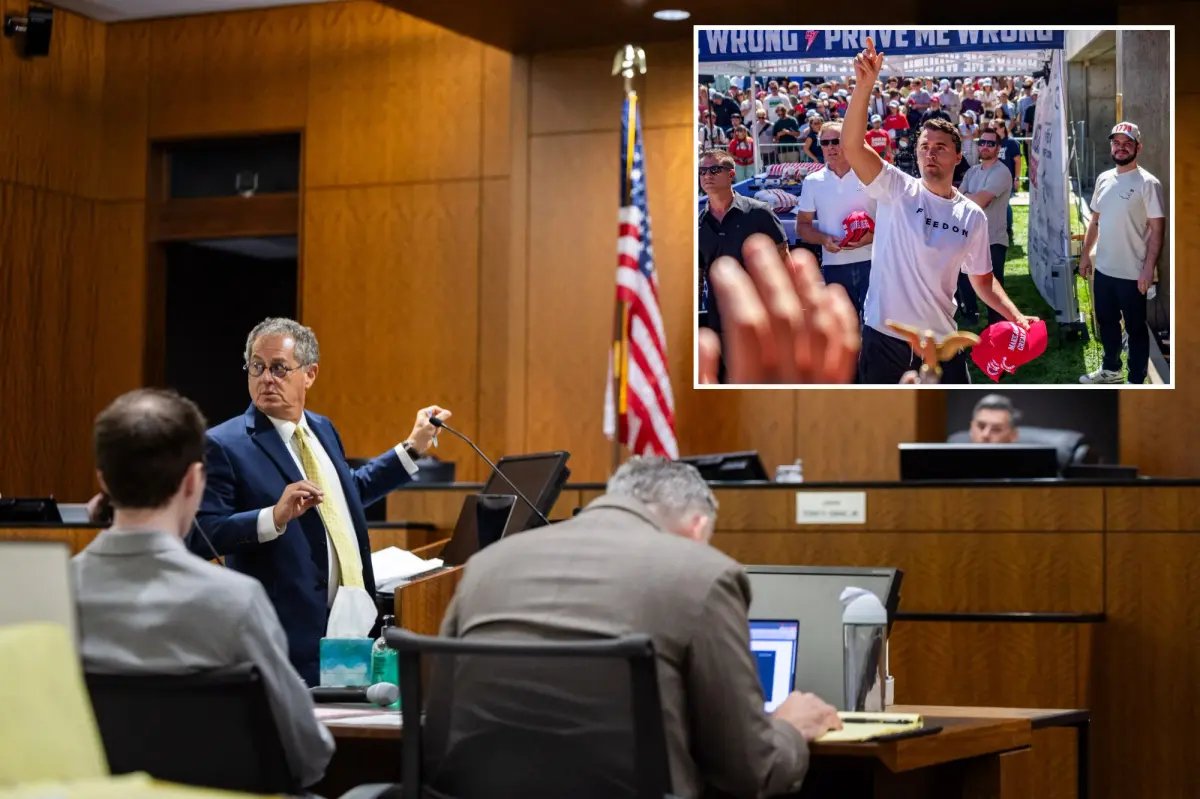

Utah taxpayers could end up shelling out more than a mind-boggling $10 million for Tyler Robinson’s lawyers to defend him in Charlie Kirk’s assassination, according to experts.
The whopping potential cost is possible because of the nature of such a sensational capital-murder case — where the stakes are as high as it gets with a defendant’s life on the line and there are likely years of appeals upon conviction, they said.
Robinson’s stonewalling lawyers “are litigating anything and everything to try to bring the prosecution to the table to offer a life-without-the-possibility-of-parole deal,” said Neama Rahmani, a prominent former prosecutor with no ties to the case, to The Post on Monday.
“So yeah, it it is costing taxpayers,” he said of the drawn-out process, which most recently involved Robinson’s preliminary hearings.
“But what do you expect the defense to do? They’re playing the hand that they’re dealt, right? And it’s not a good hand.”
The 23-year-old lefty alleged murderer is accused of fatally shooting the charismatic conservative Turning Point USA co-founder, a married 31-year-old dad of two, as he was speaking in front of a crowd of thousands at Utah Valley University in Orem in September.
The Utah County Commission approved an initial $1 million in funding last year to pay the salaries of both Robinson’s high-powered lawyers and the prosecutors on the case, Fox News reported.
A county lawmaker then said in February that an additional $1 million would be needed from the state for the lawyers, for a total of at least $2 million, after the county had already paid the defense team $349,000, KUTV reported at the time.
Part of the reason for the high price tag is because Robinson — who’s been deemed too poor to pay for his own defense — is entitled under state law to be repped by a highly specialized team of lawyers who are experts in the appeals process.
They thus command a higher price — and taxpayers must foot the bill as the painfully slow case plods along while his lawyers try to take possible execution off the table.
Robinson doesn’t even have a trial date yet — 10 months after the Sept. 10 shooting.
The accused killer’s lawyers have stonewalled the upcoming trial at every juncture by filing a slew of seemingly endless motions ranging from repeated requests to keep the media from filming and photographing in court, to seeking to disqualify and sanction prosecutors — all in apparent bid to bring prosecutors to the plea-deal table.
As far as Robinson’s camp goes, the tactic would hopefully end with the prosecution taking the death penalty off the table, similar to how the quadruple homicide case of Bryan Kohberger played out, Rahmani said.
“They’re trying to put pressure on the prosecution to offer a life deal. Like they did in Kohberger,” Rahmani said of his lawyers.
“If the state offered a plea deal and a life sentence, the taxpayers would save millions and millions of dollars,” the expert said, noting it’s usually cheaper to put someone behind bars for life than to sentence them to death because of the cost of the appeals process.
Judge Tony Graf — who is overseeing the case — is also extra cautious, which has slowed things down, Rahmani noted.
“I think all the attention on the case, he doesn’t want to make a mistake or be overturned on appeal,” he said of the judge. “He’s very slow, he’s very thorough, and very deliberate.”
Here’s the latest on the murder trial of Charlie Kirk’s alleged killer, Tyler Robinson:
Utah defense lawyer Nathan Evershed told The Post he would actually expect Robinson’s team to employ such a a delay strategy because it is a common move in capital cases as a means of seeking to secure a life-in-prison plea deal.
“Usually what happens is that the longer a case can get delayed, the more of a chance there can be an off-ramp or a plea deal,” Evershed said.
“And an off-ramp is harder to find when it’s raw and very, very fraught with emotions. Whereas it’s easier to find when it’s less raw and you’re able to come to the table.”
He agreed with Rahmani that Robinson’s case would be very pricey given the potentially long trial, his team of death-penalty-specific lawyers and the expert witnesses that would have to be hired to testify at both the guilt phase of trial and the sentencing phase.
“It’s going to cost quite a bit of money to get to that point,” Evershed said. “And the only people that will be paying for that are the taxpayers.”
Last week, Judge Graf sat through a multiday preliminary hearing and must now decide whether there is probable cause for the case to move to trial. The process is Utah’s alternative to grand-jury indictments.
Not only was that hearing delayed by two months from its original May date, but Graf said he wouldn’t rule until further arguments in September.
And a trial date wouldn’t be put on the books until after his ruling and after Robinson’s arraignment, which would follow if Graf finds probable cause. The defendent is currently remanded behind bars.
Kirk’s widow, Erika Kirk, his parents and family friends were in attendance for the premilinary hearings, during which gruesome videos of the public shooting of Kirk were played for the judge. Erika stepped out of the courtroom while the harrowing footage was shown.
Erika did not respond to a Post request for comment Monday.
— Additional reporting by Jared Downing
