


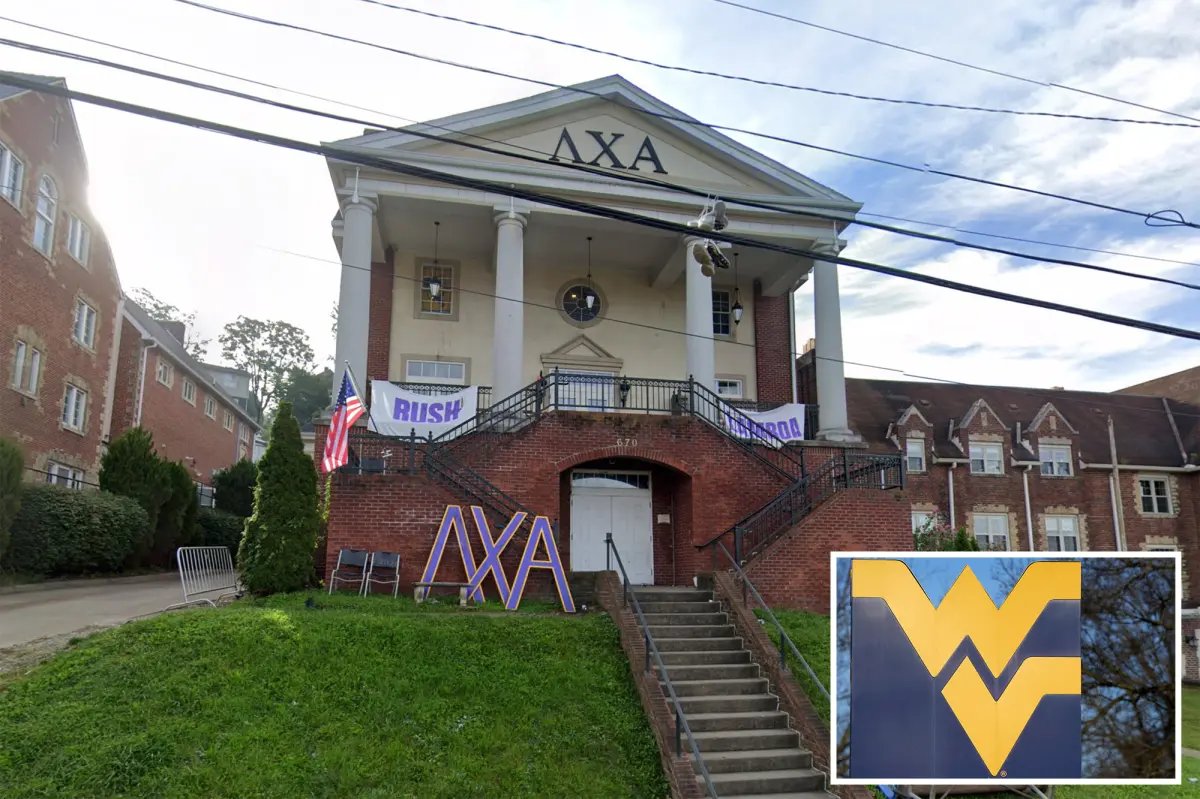
Trouble is brewing for the frat bros at West Virginia University.
The school has slapped Lambda Chi Alpha with an interim suspension amid hazing allegations, adding to a string of fraternity scandals on college campuses across the country.
The Morgantown university announced the suspension on Oct. 9, three days after campus police issued a warning following anonymous reports of hazing, according to UVA Today.

A campus warning is issued when a reported crime covered by the federal Clery Act is considered to pose a “serious or continuing” threat to the campus community.
And university officials are taking a hard line.
“WVU has zero tolerance for hazing or any dangerous activities that threaten student safety or well-being. The University is committed to providing a safe environment for students, faculty, and staff,” the university said on its website.
Under university policy, hazing incidents are investigated and referred to the WVU Office of Student Rights and Responsibilities for review.
The school’s student code strictly prohibits hazing by individuals and recognized student organizations, according to the Campus Student Code, including potentially dangerous rituals involving “beatings, branding and forced consumption of alcohol, food or drugs which could be deemed to adversely affect physical health and safety of the person or persons so treated.”
The allegations come amid other fraternity-related controversies at Cornell University, where a woman claims she was gang-raped by seven fraternity members, Arizona State, and Penn State, where a fraternity-house drug ring was busted in August.

National data suggest hazing reports extend well beyond individual campuses.
A bombshell Sept. 16 report from HazingInfo — which analyzed data from July 2025 through August 2026 — documented at least 556 reported hazing incidents during that time.
Roughly one in six US colleges and universities reported at least one hazing incident in that period.
“Students and families can now see there are hundreds of hazing incidents documented on campuses each year,” said Jolayne Houtz, HazingInfo’s founder. “That likely means thousands of hazing victims.”
Houtz, whose 19-year-old son died after being hazed at Washington State University in 2019, has urged universities to address the problem, warning that hazing can have deadly consequences.
“Hazing is not an isolated issue for a handful of fraternities or campuses. It is a public health crisis and a national disgrace,” she said.
Lambda Chi Alpha remains under interim suspension while WVU addresses the allegations.
WVU Communications Director Shauna Johnson told The Post: “We have no additional information to provide at this time.”
Lambda Chi did not respond to The Post’s requests for comment.
