


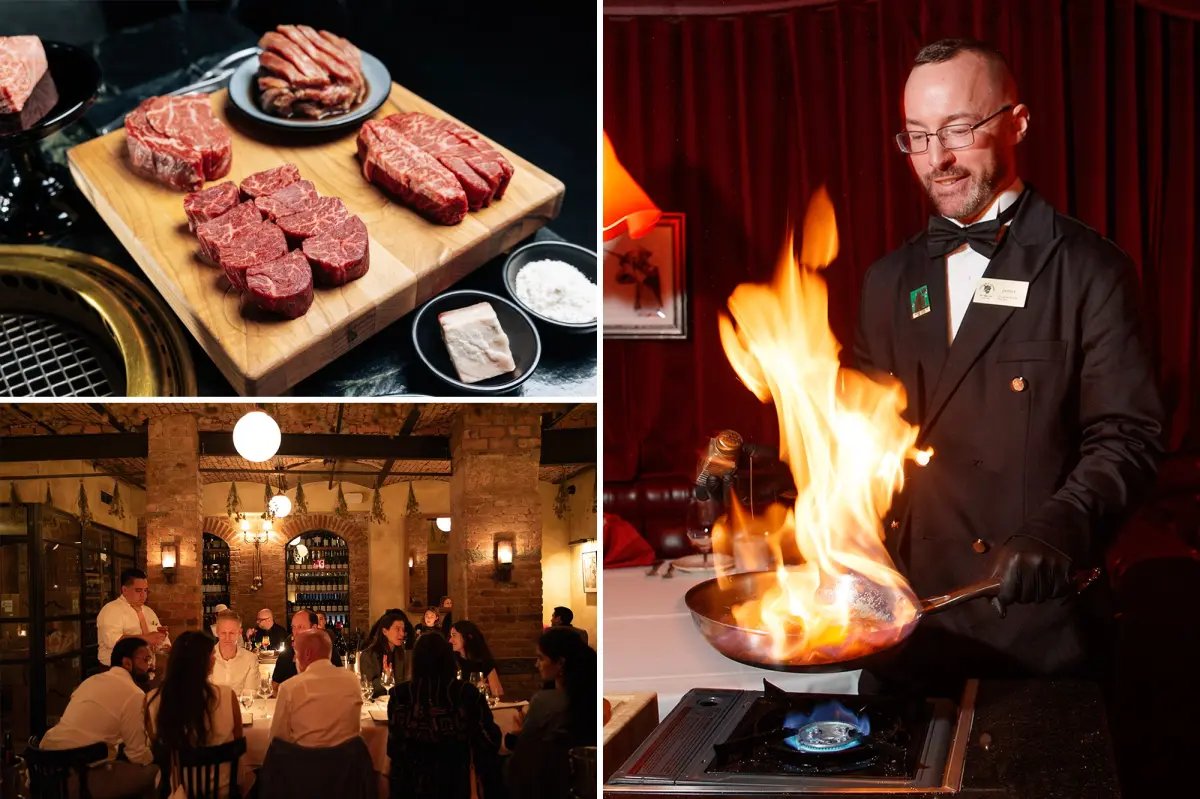

Vegan, shmeygan — red meat in all its bloody glory is the king of New York taste.
While the media hype a mostly imaginary craving for plants, seeds, obscure global delicacies and 10-seat omakase counters, the numbers tell the real story about what New Yorkers are paying to eat.
Why the disconnect between popular taste and politicized shilling for plant-based diets?
Max Tucci, a partner in Delmonico’s chuckled, “New York never lost its appetite for steak — it’s just the headlines that went elsewhere.”
More than 15 new steakhouses of all kinds opened in the Big Apple over the past three years, many of them 200-plus-seat giants. As many launched between 2019 and 2023.
Nearly all are thriving, notwithstanding publicity for supposedly healthier fare. Only a tiny handful closed over the same period, most notably Porter House and a single Wolfgang’s branch out of five.
The new, thundering herd included the uptown edition of Korean-style Cote; Las Vegas-inspired Golden Steer and Carver Steak; Monte Carlo-born Beefbar; Argentine-inspired Graciela and Baires Grill; Mexican-style Cuerno; and La Tete D’or from French-born Daniel Boulud.
Elder is based on British-Indian menus; Fogo de Chao brought its Brazilian style to the World Trade Center; and Amasa goes Latin at the Kimpton Era Hotel.
The most recent global tide was preceded by Salt Bae’s Nusr-Et (Turkish), Hawskmoor (English), and Carne Mare (Italian).
There’s no slowing the momentum. Last year brought instantly successful Palladino’s at Grand Central Terminal. This year saw the Manhattan debuts of Atlantis Prime, Vinyl Steakhouse and Dynamo Room.
Coming soon are one of next year’s most anticipated openings, Delmonico’s Reserve on midtown Sixth Avenue. Also coming soon are Jack D’s and Maple & Ash from Chicago, which promises to be the first “experiential steakhouse.”
Meanwhile, old-school beeferies like Peter Luger, Smith & Wollensky, Sparks, Wolfgang’s, Empire Steak and Knickerbocker Bar & Grill continue to prosper.
Michael Stillman’s company Quality Branded includes the original Manhattan Smith & Wollensky, which has seen a 5-10% increase in business over the past two years — “a big number for a 50-year-old place,” he marveled.
Realization that New Yorkers love red meat more than ever even prompted some famous chefs and owners to change course.
Vegan-heaven Eleven Madison Park added beef and chicken to its menu for the first time early this year. Jose Andres turned his Baazar at the Ritz-Carlton Nomad into Bazaar Meat — a steakhouse. Simon Oren’s Monterey originally identified as an American brasserie; it’s now proudly “a modern steakhouse.”
Mark Bucher, a National Restaurant Association board member who founded the Medium Rare empire including a Manhattan outpost, recalled that the great French chef Paul Bocuse advised young chefs, “Give customers what they want — not what you want.”
For Americans and for most New Yorkers, “Meat and potatoes are the center our diets” notwithanding exotic passing fads, Bucher said.
For sure, Big Apple steakhouses now offer first-rate seafood, pasta and salads as well. And the beef’s never been as good, from USDA Prime to Japanese Wagyu blends.
Today’s steakhouses “are more elevated,” said Sebastien Silvestri, CEO of Daniel Boulud’s Dinex Group.
At Boulud’s elegant La Tete D’or, where the most popular cuts are filet mignon, porterhouse, cote de bouf and New York strip, “Daniel sources the best meat from around the globe and uses French techniques on it.”
Its success came as no surprise to Silvestri. When he previously worked at several Las Vegas casino hotels, “We had the best chefs in the world, like Daniel, Thomas Keller and Charlie Trotter.
“And out of 40 restaurants the four top-grossing ones were all steakhouses.”
