


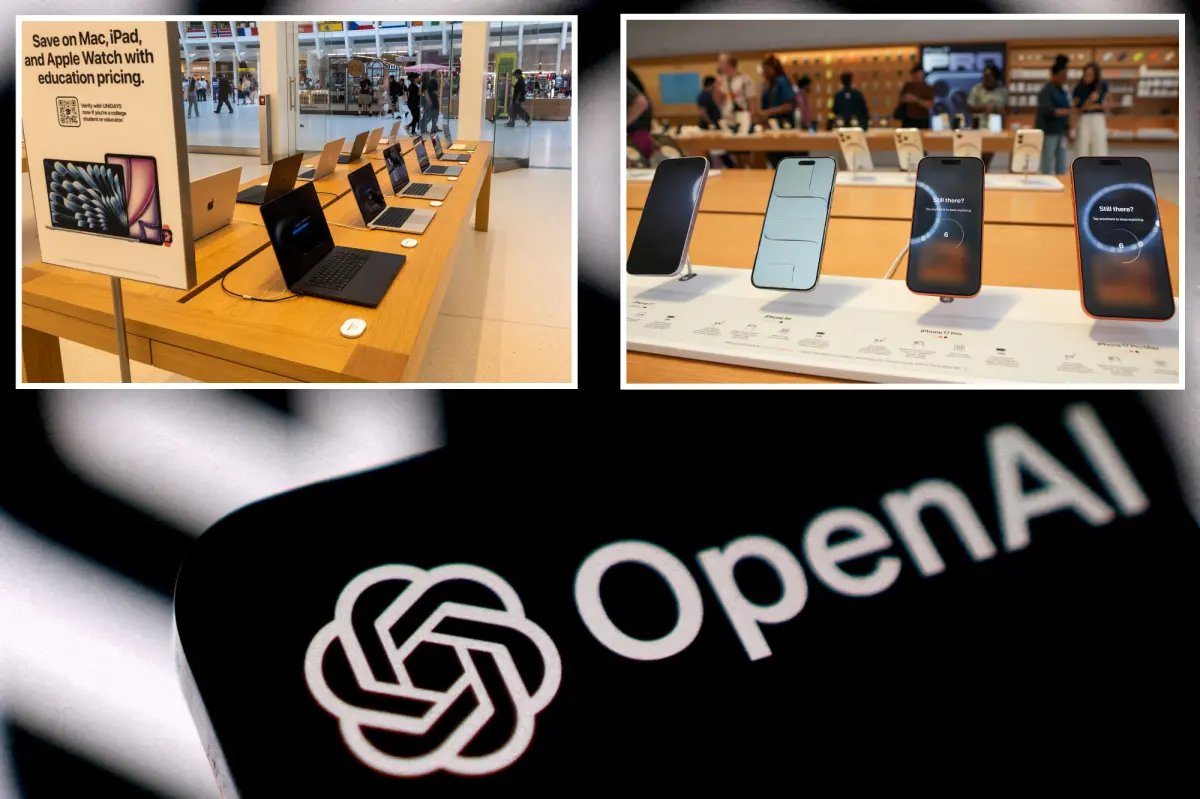

OpenAI slammed a lawsuit from Apple alleging it stole the iPhone maker’s trade secrets by hiring its employees, saying it’s “a mess of Apple’s own making,” according to a new legal filing.
The Sam Altman-led firm argued Apple’s lawsuit was a “baseless” attempt to keep the company from recruiting more employees and slow its progress on its consumer devices.
Many of the accusations that Apple made in its lawsuit are the result of its own bizarre offboarding process for workers, and there’s nothing illegal about Apple employees deciding to leave for new jobs at OpenAI, the company alleged in the late Monday filing in the Northern District of California.
“This dispute is a mess of Apple’s own making, and it is trying to blame everyone else,” OpenAI said in the document.
“Apple blames employees who left the company for taking their personal accounts with them – even though Apple encouraged them to use personal accounts for work.
“It blames employers who interview Apple employees for asking questions – even though those unremarkable questions are standard in tech and every other industry.”
Apple did not respond to The Post’s request for comment.
In July, Apple sued OpenAI for allegedly coordinating the theft of product designs, manufacturing processes and supply chain strategies – saying former Apple workers had brought confidential information with them at OpenAI’s behest.
The bombshell suit specifically named OpenAI’s chief hardware officer, Tang Tan, who worked at Apple for 24 years, and Chang Liu, another former Apple worker who joined OpenAI’s technical team.
OpenAI said Tan only sent non-confidential documents to his personal email, along with congratulatory messages from friends and colleagues and a copy of an Apple manager’s checklist for exiting employees.
Apple also alleged that Tan encouraged employees to bring “actual parts” of Apple devices to OpenAI interviews, but OpenAI said any parts that candidates brought were components of old, publicly available products, a common practice in engineering interviews.
OpenAI said in Liu’s case, Apple staffers contacted him after he left and asked for help locating files, and he obliged — an example of what OpenAI characterized as a dysfunctional offboarding process at Apple.
The AI firm jabbed at Apple’s, saying it’s “no wonder” 400 of their employees have left the company to join OpenAI.
“Apple cannot stop the next 400 employees from leaving by filing baseless lawsuits,” OpenAI said in the filing.
“Employees have choices. They can leave a company like Apple that has struggled to adopt AI and move to an exciting startup that builds innovative products. Apple may not like those choices. But it cannot claim those choices are unlawful, and it cannot use its own sloppy procedures to blame others for its own mess.”
In a separate filing Monday, Apple asked for expedited discovery, alleging Liu only recently handed over a MacBook he used after leaving Apple that showed he downloaded confidential Apple information and instructed an OpenAI colleague to destroy evidence.
The legal battle is part of the fallout from a 2024 partnership between the two companies to have OpenAI’s ChatGPT work with Apple’s Siri.
Apple’s newest Siri, announced in June, is powered by Google’s Gemini.
OpenAI has since emerged as a potential threat to Apple’s business, as the company plans to release its own consumer devices – trying to chip away at the iPhone’s tight grip on the market.
In its legal filing, OpenAI said its first expected hardware device “is a new type of consumer device that differs materially from known Apple products.”
As Apple has been rushing to ramp up its own AI efforts, it sought a preliminary injunction to slam the brakes on OpenAI’s hardware ambitions in August. A judge is yet to rule on the request.
OpenAI, bought io Products – founded by longtime Apple designer Jony Ives – for $6.5 billion last year. Tan left Apple to join Ives’ startup, and is now working for OpenAI post-merger.
The Post’s parent company, News Corp, has a content-licensing deal with OpenAI.
