


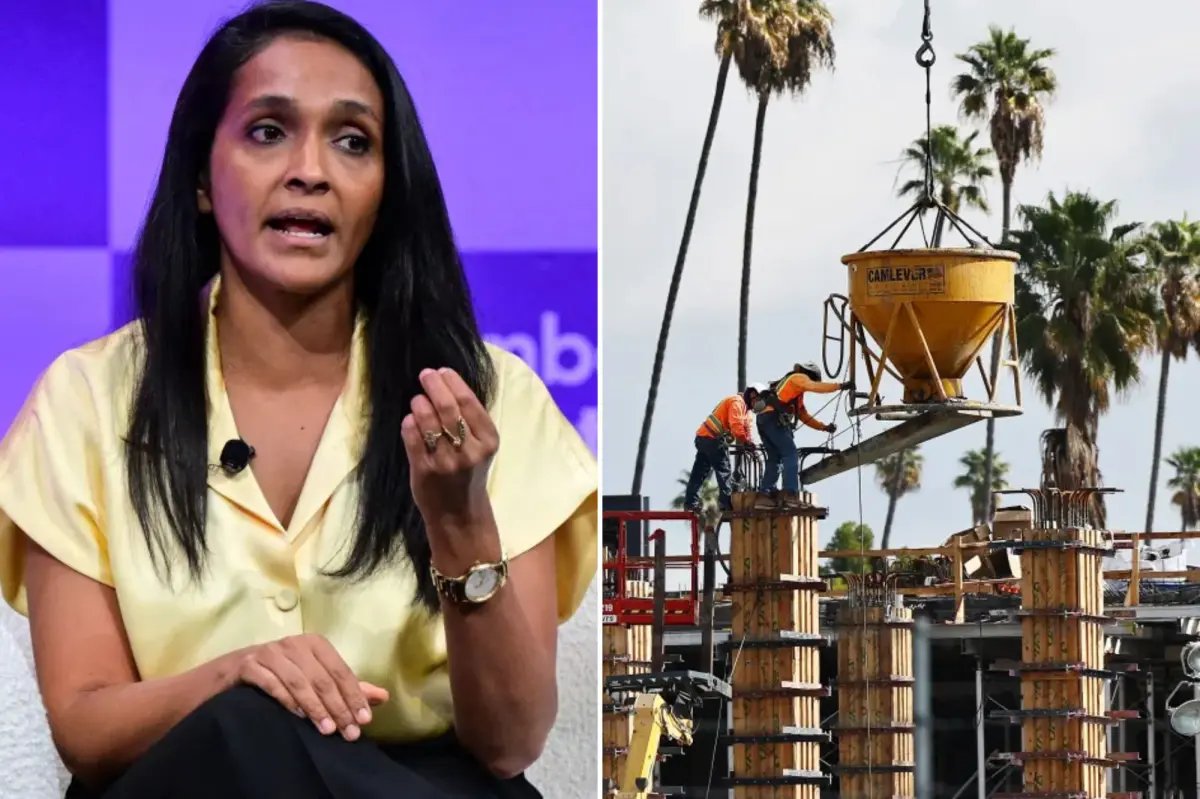

Los Angeles had a housing shortage. So naturally, it decided to tax housing.
In 2022, voters approved Measure ULA.
They were told they were voting for a “mansion tax” on millionaires and billionaires. Far less attention was paid to apartment buildings, commercial property and development sites.
Proponents projected the measure could help produce more than 26,000 affordable homes over a decade.
It sounded almost painless. Tax mansions. House poor people.
Except ULA isn’t really a mansion tax. It’s a tax on real-estate transactions.
Download The California Post App, follow us on social, and subscribe to our newsletters
California Post News: Facebook, Instagram, TikTok, X, YouTube, WhatsApp, LinkedIn
California Post Sports Facebook, Instagram, TikTok, YouTube, X
California Post Opinion
California Post Newsletters: Sign up here!
California Post App: Download here!
Home delivery: Sign up here!
Page Six Hollywood: Sign up here!
Sell an apartment building above the threshold? Taxed. Commercial property? Taxed. A development site? Taxed.
Today, ULA adds a 4% tax to qualifying property sales above $5.4 million and a 5.5% tax to sales of $10.9 million or more — on top of the city’s existing transfer tax. And those dollar thresholds are set to increase automatically, tied to inflation.
Even worse, once a sale crosses the threshold, the tax applies to the entire sale price — not just the amount above the threshold. Sell a property for just over $5.4 million and the ULA tax alone can top $216,000.
The distinction matters because politicians love talking about who supposedly pays a tax. What matters in the real world is what transaction government is taxing — and how people change their behavior to avoid it.
Tax cigarettes and politicians expect people to smoke less.
Tax carbon and they expect people to emit less carbon.
Tax high-value real-estate transactions and apparently everyone is supposed to be shocked when people engage in fewer high-value real-estate transactions.
Researchers Michael Manville of UCLA and Mott Smith of USC estimate that after ULA took effect, the odds of a Los Angeles property selling above the tax threshold fell by as much as 50%.
Their strongest evidence showed transactions involving commercial, industrial and multifamily properties fell an estimated 30% to 50%.
Those aren’t mansions. That’s the real-estate economy.
Then comes the real absurdity: housing construction.
A 2026 econometric analysis cited by UCLA estimates ULA reduced permitting for multifamily projects of 20 units or more by 31% — roughly 1,900 housing units a year.
Los Angeles imposed a tax to produce more housing that researchers now estimate is causing the city to produce less.
Apartment buildings and development sites are investments. New housing gets built because somebody believes that after buying land, getting permits, paying fees and financing construction, there will be money to be made.
Land changes hands. Apartment buildings are bought and sold. Investors can put their money somewhere else.
Make those transactions more expensive and some housing projects simply don’t happen.
Slap another 4% or 5.5% on qualifying property transfers and some deals no longer pencil.
Fewer sales carry another cost.
Because California properties are generally reassessed when ownership changes, Manville and Smith estimate ULA initially reduces property-tax revenue to local governments by roughly $25 million annually, with the losses compounding over time.
A new tax is suppressing the activity that generates an existing tax.
Meanwhile, Los Angeles is spending the proceeds.
As the California Post reports, the city just authorized a record affordable-housing funding round, with hundreds of millions of dollars coming from ULA.
Of the latest funding round, $55.5 million is going toward 3,713 existing affordable-housing units rather than new construction.
That includes properties on Skid Row where court records describe allegations of bedbugs, cockroaches, rats, sewage leaks and human waste.
That’s a long way from the sales pitch about producing tens of thousands of affordable homes.
And it raises another question: After doing all this economic damage to raise the money, are Los Angeles politicians even spending it wisely?
The Post’s reporting gives taxpayers plenty of reason to ask.
One developer quoted by the Post distilled this entire fiasco into seven words: “You are taxing housing to pay for housing.”
Hard to improve on that.
The sales pitch focused on who would write the check. It ignored what the tax would do.
Transactions decline. Projects don’t pencil. Housing that otherwise might have been built never gets built.
Politicians sell taxes by identifying an unpopular taxpayer and promising everyone else something for free. With ULA, it was millionaires and billionaires.
But Los Angeles didn’t tax rich people. It taxed real-estate transactions.
And it got fewer of them.
The story of the ULA tax and its terrible effect on the Los Angeles real-estate market is just another reminder that the sad decline of the city is self-inflicted — the result of bad policy decisions like this one.
Jon Fleischman, a longtime strategist in California politics, writes at SoDoesItMatter.com
