



WASHINGTON — Federal lawmakers could receive thousands in back pay — and a substantial salary increase — if a long-running lawsuit is decided in their favor, putting taxpayers on the hook for millions of dollars.
A group of current and former members of Congress won a major victory last month when a federal court ruled their case to boost congressional pay could go forward.
The plaintiffs charge that when Congress repeatedly canceled cost-of-living adjustments in their salary by voting to repeal a 1989 law meant to keep member salaries apace with inflation, it violated the 27th Amendment.
If the judiciary agrees, taxpayers will have to pay at least $69 million to make lawmakers whole, according to an estimate by the National Taxpayers Union.
Publicly sensitive to being seen as self-dealing, legislators have kept their annual pay fixed at $174,000 for nearly two decades. But behind the scenes, there have been grumbles about the stagnant salaries.
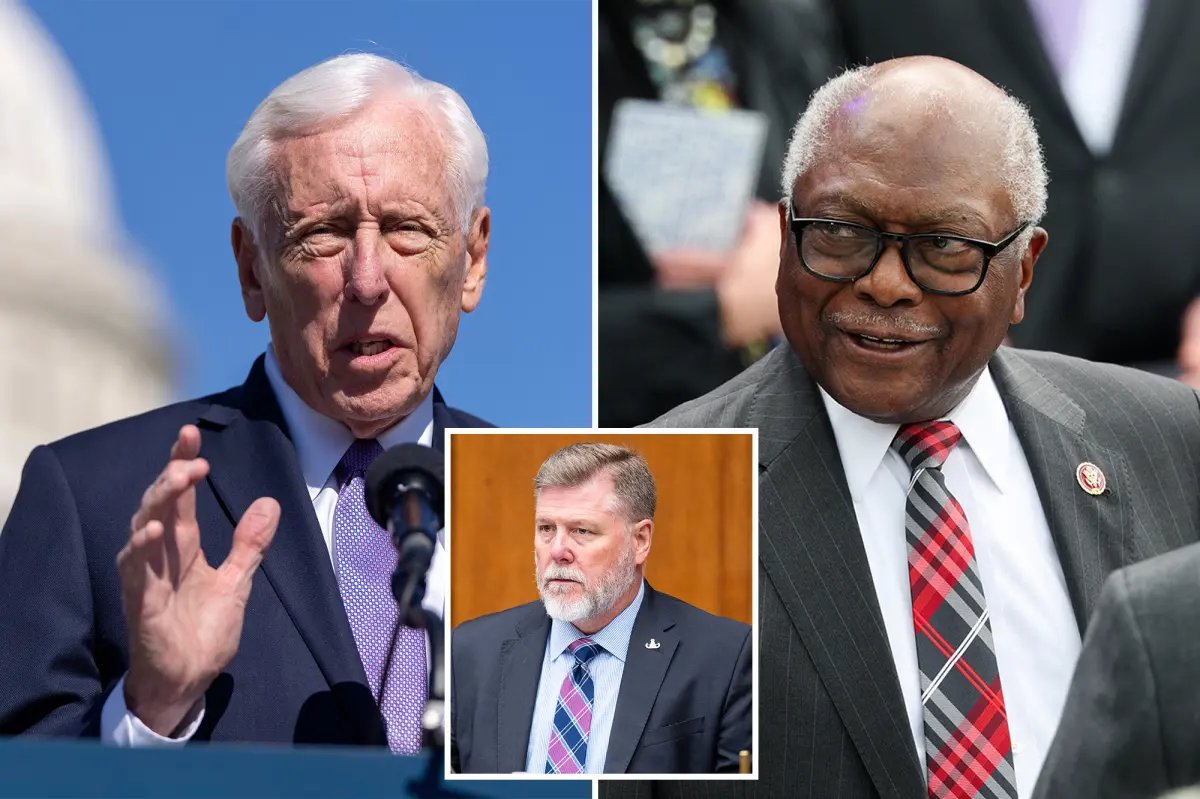
“Seventeen years, I have gotten people from my side and people from the other side saying, ‘Can’t we fix this?’” Rep. Steny Hoyer (D-Md.), a former House majority leader and one of the plaintiffs in the case, said at an appropriations hearing last month.
“Our goal is to stop the continual violations of the Constitution as it relates to Congressional pay,” Ken Cuccinelli, the attorney for the suing lawmakers, told The Post in an email. “As a policy matter, I would note that Congressional pay on an inflation-adjusted basis is the lowest it has been since 1954.”
Cuccinell — a Republican former Virginia attorney general and acting deputy Homeland Security secretary during President Trump’s first term — put together a class action lawsuit with Hoyer and fellow Reps. Rick Crawford (R-Ark.) and James Clyburn (D-SC) acting as plaintiffs along with former Reps. Rodney Davis (R-Ill.) and Ed Perlmutter (D-Colo).
The exact number of current and former members who could receive back pay remains uncertain and is one of the questions that Federal Claims Court Judge Eric Bruggink asked both sides to address in filings due later this summer.
Other outstanding issues include how potential damanges will be calculated, with individual lawmakers due between $225,000 and $420,000.
Apart from back pay, a federal court win could lead to lawmakers receiving automatic salary increases each year.
That would mean every member of Congress could see their pay hiked to more than $253,000 per year — an increase of 45%, according to estimates.
In an added twist, former lawmakers could then appeal to the federal Office of Personnel Management to have their pensions increased, adding more money to the taxpayers’ tally.
Demian Brady, vice president of research at the National Taxpayers Union Foundation, told The Post if lawmakers want a raise, then they should vote to give themselves a raise, not rely on the court to find in their favor.
“Because of all these perplexing questions, and because the damages will fall on taxpayers through higher deficit spending and potentially higher long-term liabilities, and also because of the reputational harm this will do to Congress as an institution, I’ve urged the lawmakers to drop their case,” he said.
“They should seek higher pay by convincing their colleagues to vote for higher pay instead of suing taxpayers.”
Supporters of higher pay for legislators note that they often have to maintain two residences — one in their district and one in Washington DC, one of the most expensive real estate markets in the US.
Members of Congress last received a pay adjustment in 2009, when their salary was increased to its current level from $169,300, a bump of 2.8%.
Since the 27th Amendment was ratified in 1992, Congress has rejected its own pay raises 21 times.
The plaintiffs argue that violates the 27th Amendment, which states that no law “varying” lawmaker compensation “shall take effect, until an election of Representatives shall have intervened.”
Judge Bruggink agreed the amendment applies in this case.
“Laws varying congressional compensation are ineffective to the extent they seek to effectuate a change in congressional compensation before an election intervenes,” he wrote in his opinion advancing the case.
