


California faces potential water shortages if the states that use the Colorado River can’t make a deal.
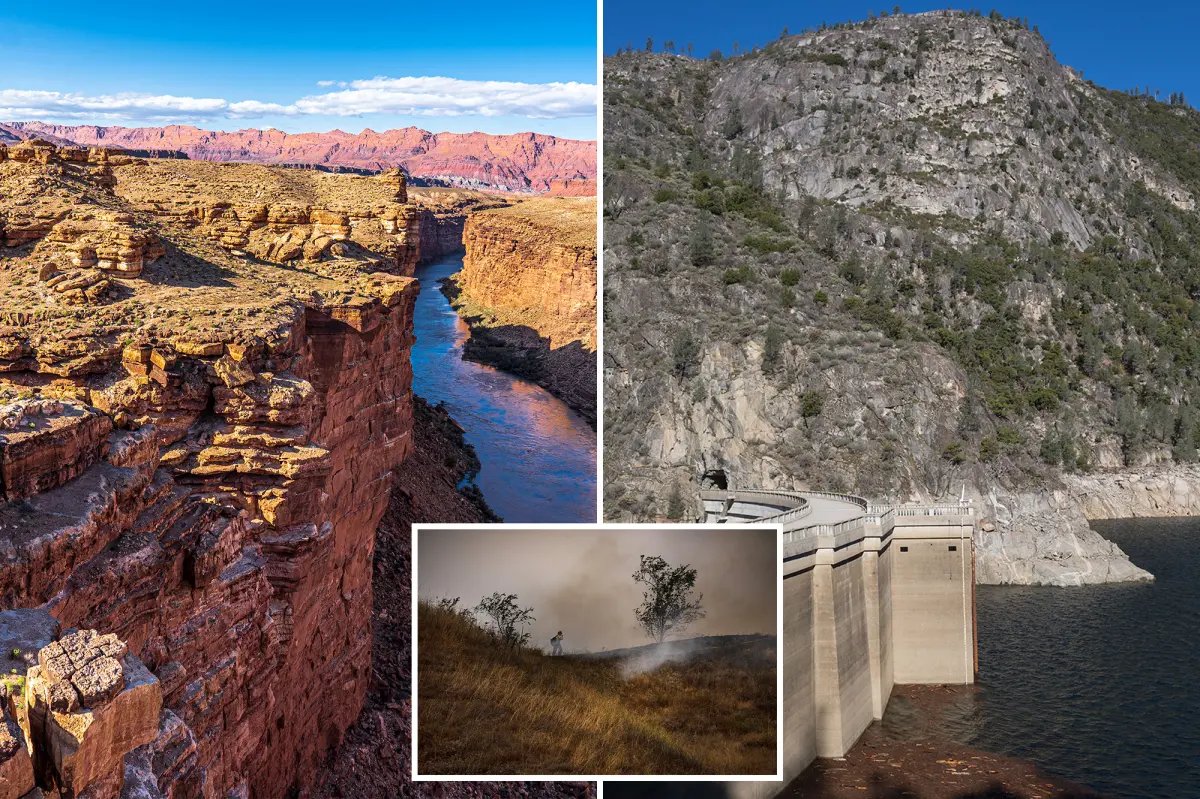
Seven states depend on the river, which winds from the Rocky Mountains through the Grand Canyon to the Gulf of California. The states take so much water from the river that it rarely reaches the sea.
The Colorado River provides about one-third of Southern California’s total water supply.
The past 25 years have been particularly dry. And two major dams on the river — Lake Powell and Lake Mead — are dropping to dangerously low levels.
That means the states need to come up with a new water-sharing agreement.
The federal government says it will impose cuts if there’s no deal.
But it can’t do much to the Upper Basin states — Wyoming, Utah, Colorado, and New Mexico. It can only impose cuts on the Lower Basin states — Nevada, Arizona, and California.
The Trump administration recently agreed to a two-year compromise in which the three lower states agreed to small water cuts. California will reduce its take by 12%.
The federal government will come back in two years and see if that is working. It could extend that compromise every two years, for up to ten years.
Download The California Post App, follow us on social, and subscribe to our newsletters
California Post News: Facebook, Instagram, TikTok, X, YouTube, WhatsApp, LinkedIn
California Post Sports Facebook, Instagram, TikTok, YouTube, X
California Post Opinion
California Post Newsletters: Sign up here!
California Post App: Download here!
Home delivery: Sign up here!
Page Six Hollywood: Sign up here!
But if conditions don’t improve, bigger water cuts are coming for California. And that could affect everyone, especially if there’s another drought.
California is not short of water. But it is short of good water management.
Start with the basics: California has a Mediterranean climate: warm and dry, with seasonal rainfall and snow in the winter.
Some parts of the state are lush and green — the west-facing, windward slopes of the coastal range and the interior Sierra Nevada.
That is where redwoods and towering sequoias grow. It’s also where tourists ski in the winter.
The eastern or leeward side of the mountains are dry almost year-round, There, the only natural water sources are the underground aquifer, which can be tapped with wells; or rivers like the Colorado.
Sometimes California has “too much” water. In years with abundant winter rain and snow, parts of the the narrow, dry plain between the mountain ranges — the Central Valley — can flood. The state
The history of California since large-scale settlement began has been about managing these erratic supplies of water so there are enough reserves in the dry years, and flood mitigation in wet ones.
Another challenge has been to move water to where the people are.
San Francisco is surrounded on three sides by the salty Pacific Ocean. LA has has few water sources other than rain, underground aquifers, and rivers that run dry most of the time, then flood during storms.
So, over time, California has built water infrastructure — often at some environmental cost.
San Francisco relies on the O’Shaughnessy Dam at Hetch Hetchy, which destroyed a majestic ravine near Yosemite, but keeps a city of more than 800,000 people alive.
LA essentially stole its water from the Owens Valley more than a century ago, channeling it into an aqueduct that allowed the city to grow dramatically.
The project to divert the Colorado River to the farms of the Imperial Valley accidentally broke a levee revived a large, prehistoric inland lake, the Salton Sea.
And the New Deal brought the state and federal water projects, with systems of dams and aqueducts to collect water from wetter Northern California and send it to the dry south, and to farms on the leeward side of the Central Valley.
California hasn’t built a major new dam in half a century. In that time, the state’s population has doubled. That means there is less water to go around.
In drought years, farmers are forced to use wells, at great cost. That has caused many farms to go out of business — and has caused the ground to subside, in places.
There are new, innovative ideas about how to increase the water supply.
One is desalination, an energy-intense process of removing the salt from sea water to make it usable and drinkable..
Some municipal water agencies are using similar technology to purify wastewater, returning it to the system cleaner than before.
Environmentalists oppose desalination, partly because it uses so much energy. They would rather see California cut down on water consumption, and focus on long-term climate change solutions
But California’s water needs are only going to grow — and the Colorado River will run dry long before electric vehicles can cool the planet (if they ever do).
We need to invest in the infrastructure to store, and create, more water.
This year, we are facing a “wet” El Niño weather pattern, so people won’t be thinking about it.
But droughts are inevitable. And if the Colorado River stops flowing, it will be too late to make a difference. We need to build more water infrastructure — now, and on a big scale.
Joel Pollak is Opinion editor at the California Post.
