


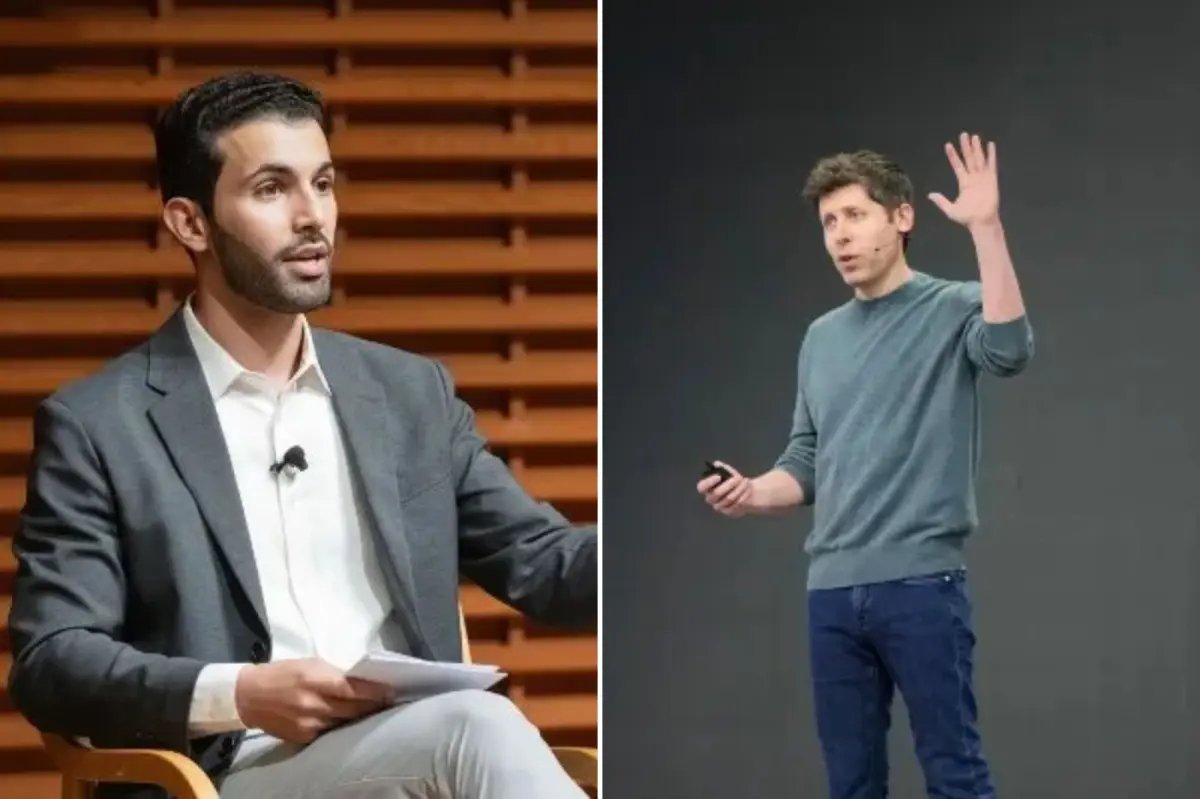

OpenAI’s infiltration by a suspected Saudi Arabian spy is a huge wake-up call about who is trying to steal our most valuable assets.
If Bill Gates and the doomerists are right and AI could kill billions of people, shouldn’t we be demanding tighter security and oversight than we did during the Manhattan Project? And should protecting technology that could determine America’s future fall to the companies alone?
While we’re focused on rogue bots and export controls, we should also be scrutinizing the people on the inside building this technology — including whether the most sensitive roles should require security clearances.
The issue was brought into sharp focus with allegations against OpenAI engineer Abdulrahman Alfozan. Federal prosecutors say the 35-year-old Saudi national planted a recording device concealed in toilet paper behind a television in an executive conference room — where he gleaned information about proprietary research and even some government projects.
Alfozan remains in jail as a flight risk, charged with attempting to intercept sensitive communications. He has yet to enter a plea.
That his plot was foiled is a testament to the top-notch security at these companies — OpenAI has recruited former Palantir chief information security officer Dane Stuckey and veterans of the NSA and Pentagon. They aren’t slouches over there.
But while the company says it has no indication Alfozan improperly accessed or took model weights, source code or customer data, the incident raises a bigger question: Should protecting technology that could determine America’s future fall to the companies alone?
Some argue one way to significantly reduce risk is by prioritizing US citizens for sensitive roles — as they are easier to background check and their histories can be thoroughly vetted.
“We should know who is working on these models. Foreign adversaries leverage immigration to access AI. Is [our] system being used to hurt us?” questions Joel Thayer, at the Digital Progress Institute.
One source told me he hopes the incident becomes a wake-up call about who is hired and how they’re vetted.
Ironically, OpenAI agreed in August to a $3.2 million Justice Department settlement over allegations they favored temporary visa holders over US workers in recruitment tied to green-card sponsorship.
But perhaps the debate should go beyond ensuring companies don’t discriminate against Americans to whether they should be allowed to prioritize US citizens for the most sensitive roles. That’s not to say that American citizens can’t be corrupted or used by foreign adversaries.
Set up to address these kinds of issues, the new Super Intelligence Force held its first meeting last Thursday, outlining priorities that include incident reporting, critical infrastructure and assessing AI risks, sources told The Post.
While that’s a good and necessary step, there also needs to be stricter oversight of who gets access in the first place.
Washington needs to clarify what additional safeguards should apply when work has national-security implications.
That means welcoming exceptional talent from overseas while recognizing that citizenship alone is no guarantee of trustworthiness. But tougher vetting, tighter access controls and clear rules for the most sensitive roles should be part of the task force’s agenda.
Thayer adds, “I hope this raises the question of how intellectual property intersects with national security.”
That means welcoming exceptional talent from overseas while recognizing that citizenship alone is no guarantee of trustworthiness.But tougher vetting, tighter access controls and clear rules for the most sensitive roles should be part of the task force’s agenda.
Thayer adds, “I hope this raises the question of how intellectual property intersects with national security.”
