


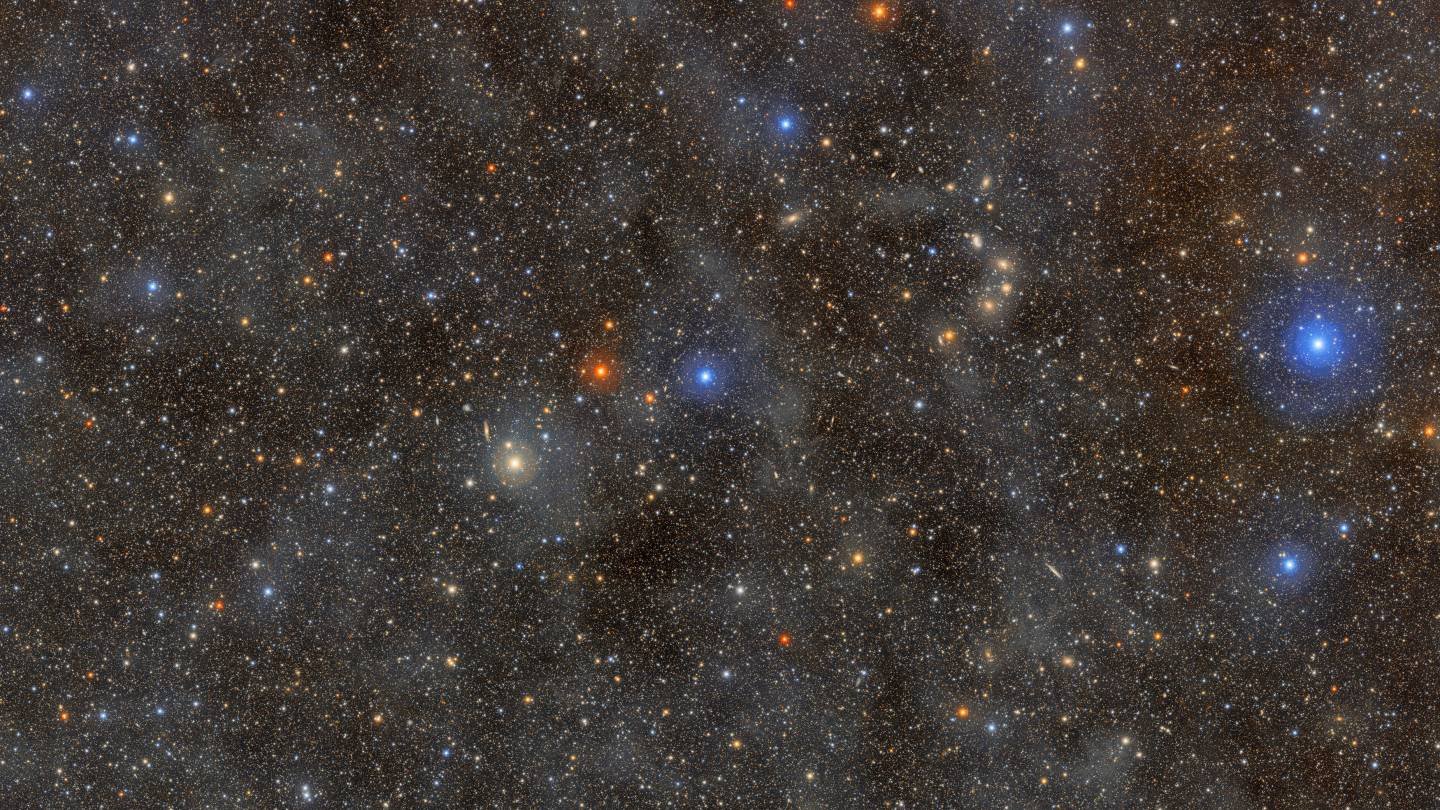
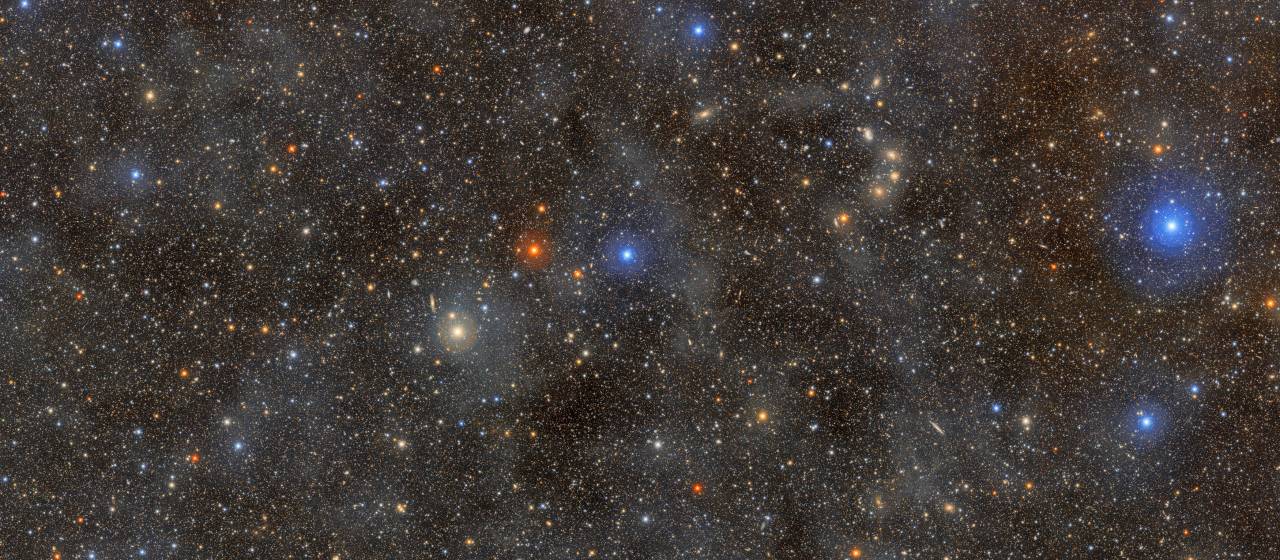
After decades of planning and construction atop a mountain in Chile, the monumental NSF–DOE Vera C. Rubin Observatory has officially started a 10-year sky survey that will provide an “ultra-wide, ultra-high-definition time-lapse record of our Universe,” according to the observatory’s announcement.
“The wait is over,” the June 30 announcement said. “NSF–DOE Rubin Observatory, funded by the U.S. National Science Foundation and the U.S. Department of Energy’s Office of Science, is now capturing the cosmos in unprecedented detail, transforming the way we study the dynamic Universe.”
Some 2,800 scientists, including Princeton researchers, are involved in the telescope’s decade-long survey of the Southern Hemisphere sky, known as the Legacy Survey of Space and Time (LSST). The New York Times described it as “a dazzling census of our cosmos.”
Among other contributions, Princeton researchers have played a major role in developing software pipelines that will process the massive amounts of data the survey has started to generate as it scans the vast cosmos. (The observatory’s 3,200-megapixel digital camera records about 10 terabytes of images every night.)
“The start of the LSST marks the culmination of over 25 years of work by researchers all over the world, including at Princeton, to build this magnificent observatory,” said Michael Strauss, professor and chair of astrophysical sciences at Princeton. “The science it will enable ranges from asteroids in our own solar system, to the structure of the Milky Way galaxy, to the nature of the dark matter and dark energy that dominate the dynamics of the expanding universe.”
Princeton’s LSST team of a dozen-plus astronomers has been celebrating milestones for the past year as the observatory’s main telescope and digital camera started capturing images on April 15, 2025, and then completed a year of final commissioning work and readiness reviews.
They had their fingers crossed approaching June 29 this year, which would mark the official start of the decade-long LSST sky survey — provided the skies were clear. “The forecast for the week was quite bad,” said Yusra AlSayyad, project manager for the LSST group at Princeton. “But it thankfully cleared up.”
AlSayyad is also deputy manager of data management for the observatory. Shortly before nightfall she shared the news with Strauss in an email: “We’re on sky.”
Along with AlSayyad and Strauss, Princeton LSST collaborators include astrophysics faculty and research scholars Alexandra Amon, Jenny Greene, Robert Lupton and Peter Melchior, along with graduate students, postdocs and research staff Jim Bosch, Lee Kelvin, Pierre-François Léget, Nate Lust, Lauren MacArthur, Jamie McCullough, Justin Myles, Erfan Nourbakhsh, Paul Price, Sophie Reed, Clare Saunders, Jared Siegel, Dan Taranu, Chris Waters and Masa Yamamoto.
“The Princeton Rubin software team, led by Robert Lupton, Jim Bosch and Yusra AlSayyad, has done an absolutely amazing job in developing the pipelines that are processing the 10 terabytes of data per night into a form that allows people to do science,” Strauss said. “Their success reflects a constant interplay between the technical aspects of the project and the science goals, to make sure LSST delivers fully on its scientific potential.”
“This moment reflects decades of vision, innovation, and the power of federal investment in science through the U.S. National Science Foundation and the Department of Energy,” said Brian Stone, performing the duties of the NSF Director, in the June 30 announcement. “Every night, NSF–DOE Rubin Observatory will expand the frontiers of knowledge and strengthen America’s global leadership in science and innovation.”
“With the launch of the ten-year Legacy Survey of Space and Time, NSF–DOE Rubin Observatory is opening a new window on the Universe. It is embarking on a mission that will redefine modern cosmology and astrophysics,” said Darío Gil, Under Secretary for Science at the U.S. Department of Energy.
The Rubin observatory is named for American astronomer Vera C. Rubin, whose work “provided convincing evidence for the existence of unseen ‘dark’ matter in the Universe,” according to her biography on the observatory website. Her son Allan Rubin is a professor of geosciences at Princeton.
