


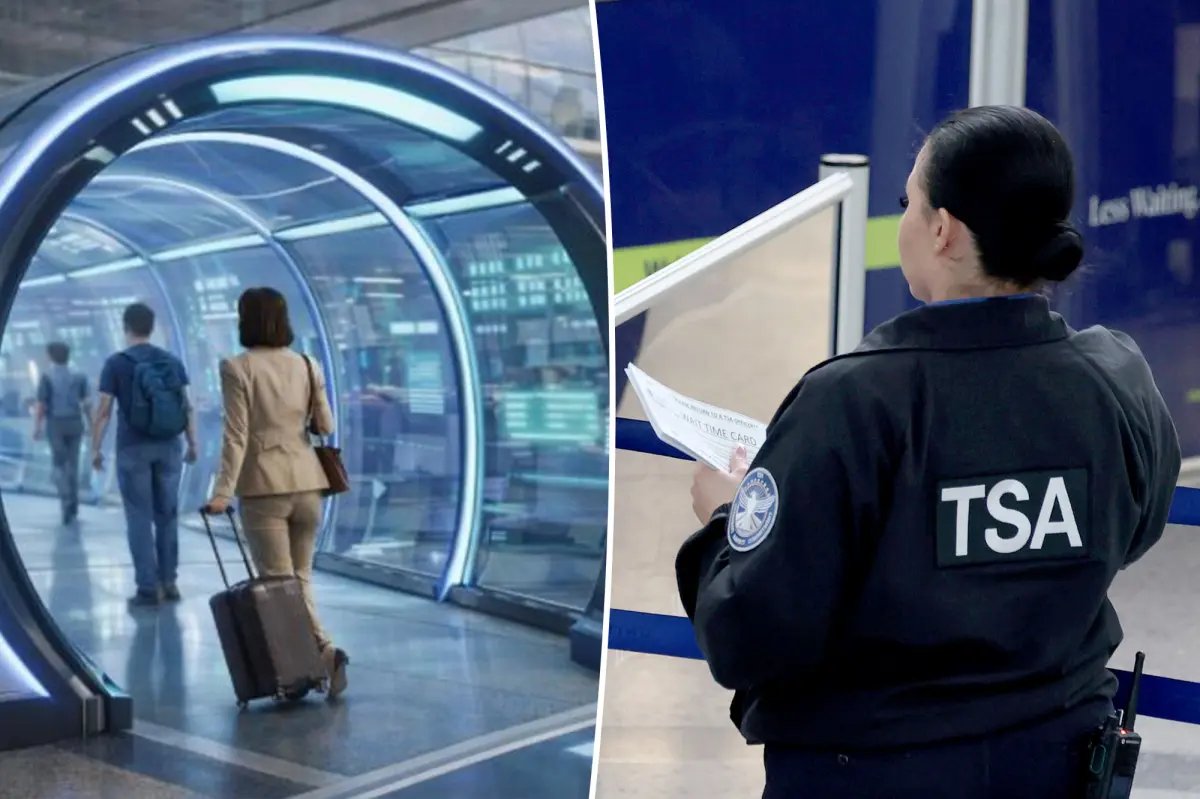

Three US airports have become early adopters of a controversial new program that allows third-party vendors to replace federal agents at security checkpoints.
Some 20 US airports, including Atlantic City and San Francisco International, are currently utilizing privatized screening as part of TSA’s existing Screening Partnership Program (SPP).
Now, three airport locations are expected to introduce privatized screening under the recently launched TSA Gold+ program.
This trinity includes Tampa International Airport in Florida, Charleston International Airport in South Carolina, and Des Moines International Airport in Iowa
An expansion on the existing SPP, TSA is referring to its Gold+ program as “the future of aviation security.”
Under the current system, SPP operated under TSA oversight and regulations, but under TSA Gold+, SPP will also be allowed to use its own technology to screen passengers and luggage, with the goal of taking some of the burden off the current staff.
“As the next evolution of the Screening Partnership Program (SPP), TSA Gold+ is a transformative upgrade to offer airports the opportunity to “opt in” to a public-private screening model tailored to their unique needs, ensuring continuity and operational stability even during federal government shutdowns,” a TSA spokesperson previously told the Post.
However, not everyone is all in on opting in.
Critics, including the American Federation of Government Employees (AFGE), which represents nearly 50,000 Transportation Security Officers across the country, say the program compromises public safety and threatens job security.
“Make no mistake – this is a major departure and step backward from the aviation screening security system that Congress created in the wake of the Sept. 11th terrorist attacks in 2001 and the deadly bombing of Pan Am Flight 103 over Scotland in 1988,” AFGE National President Everett Kelley said in a news release.
“Changes of this magnitude should not be made behind closed doors without the input of Congress, the flying public, the local airport authorities and TSA employees themselves,” he added.
The AFGE also notes that the Trump administration’s 2027 budget proposal includes the goal of eliminating nearly 8,400 transportation security officers, positions they argue would be replaced by private contractors.
Resistance to the Gold+ program is echoed by netizens.
“In ‘Trump-Murica,’ EVERYTHING is for sale – including the public’s safety,” wrote one displeased Reddit user.
“The concept of a ‘bespoke’ airport security experience should terrify people. Different standards based on different economic levels absolutely won’t be appropriate for providing national security,” said another.
However, TSA officials maintain that security standards will not be affected by the adoption of the Gold+ program.
Additionally, TSA officers will reportedly have first right of refusal for jobs with contractors, who will be required to provide commensurate pay and benefits.
In a press release, Charleston International Airport underscored that its adoption of the new program will include federal oversight.
“TSA will continue to establish all security requirements, oversee screening operations, conduct inspections, and ensure full compliance with federal aviation security regulations.”
The airport maintains that the program will offer more stability to TSA workers, assuring current officers that they will be offered the option to transition to the screening contractor without losing pay or benefits.
Meanwhile, Tampa International Airport defended their decision to go with the Gold, citing a reduction in disruptions caused by lapses in funding during federal government shutdowns and “greater flexibility in exploring new screening checkpoint infrastructure and technology.”
Des Moines International Airport, which is preparing to open a new terminal next year, said TSA Gold+ aligns with their primary goal of making travel easy.
“Travelers would continue to experience the same professional, secure screening process they’re accustomed to, but with newer technology that can help move people through the checkpoint more efficiently,” Des Moines Airport Authority CEO Brian Mulcahy said in a news release
